In this article
The recommended time for a child’s first dental check-up is when the first baby tooth comes through, or by around age 1 at the latest. The aim of an early visit is not treatment; it is to see how the teeth are developing, assess the risk of decay and give the child a positive first experience with the dentist.
- The first check-up is recommended when the first tooth comes through or around age 1.
- Baby teeth matter for chewing, speaking and holding space for the permanent teeth coming underneath.
- Putting a child to sleep with a bottle and sugary snacks spread between meals increase the risk of decay.
- A check-up every 6 months is recommended for most children.
Why do baby teeth matter?
Chewing
Healthy eating needs proper chewing.
Speaking
The front teeth help with saying some sounds correctly.
Holding space
A baby tooth keeps the place for the permanent tooth coming underneath. If it is lost early, the alignment can be affected.
What are the signs of teething in babies?
Teething shows itself through more drooling, fussiness, disturbed sleep and wanting to put hands or objects in the mouth. Signs usually appear when the gum starts to swell and vary in intensity from baby to baby.
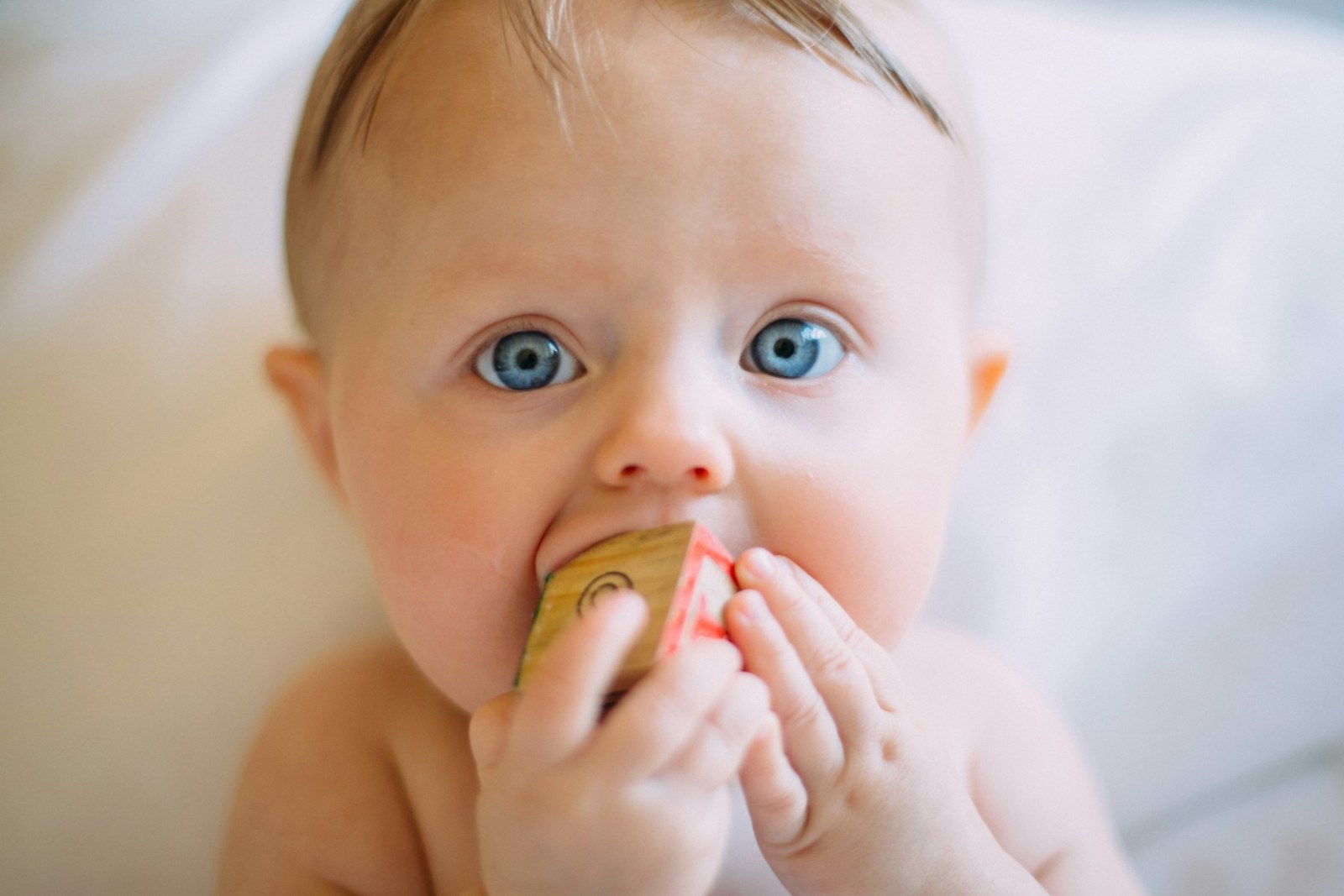
During this time there may be slightly red cheeks, loss of appetite and a mild temperature that doesn’t go above 38 degrees. The most common things are waking up crying at night and more drooling.
Gently massaging the gums with a clean finger or giving a teether chilled in the fridge can help. A high fever, diarrhoea or vomiting is usually not caused by teething; see your paediatrician.
More drooling
Drooling increases noticeably as the gums are stimulated.
Itchy gums
Because the gums are tender, the baby puts everything in their mouth.
Fussiness and sleep
Pressure in the gums can increase at night and sleep may be broken.
What happens at the first visit?
- 1Getting to know each otherfirst minutes
The child is given time to get to know the room and the instruments; nothing is rushed.
- 2Short examinationa few minutes
The teeth, gums and bite are checked. Young children can sit on a parent’s lap during the examination.
- 3Preventive careif suitable
If the child is ready, a simple treatment such as fluoride can be done.
- 4Information for the familyend
Brushing, diet and the check-up interval are discussed with the family.
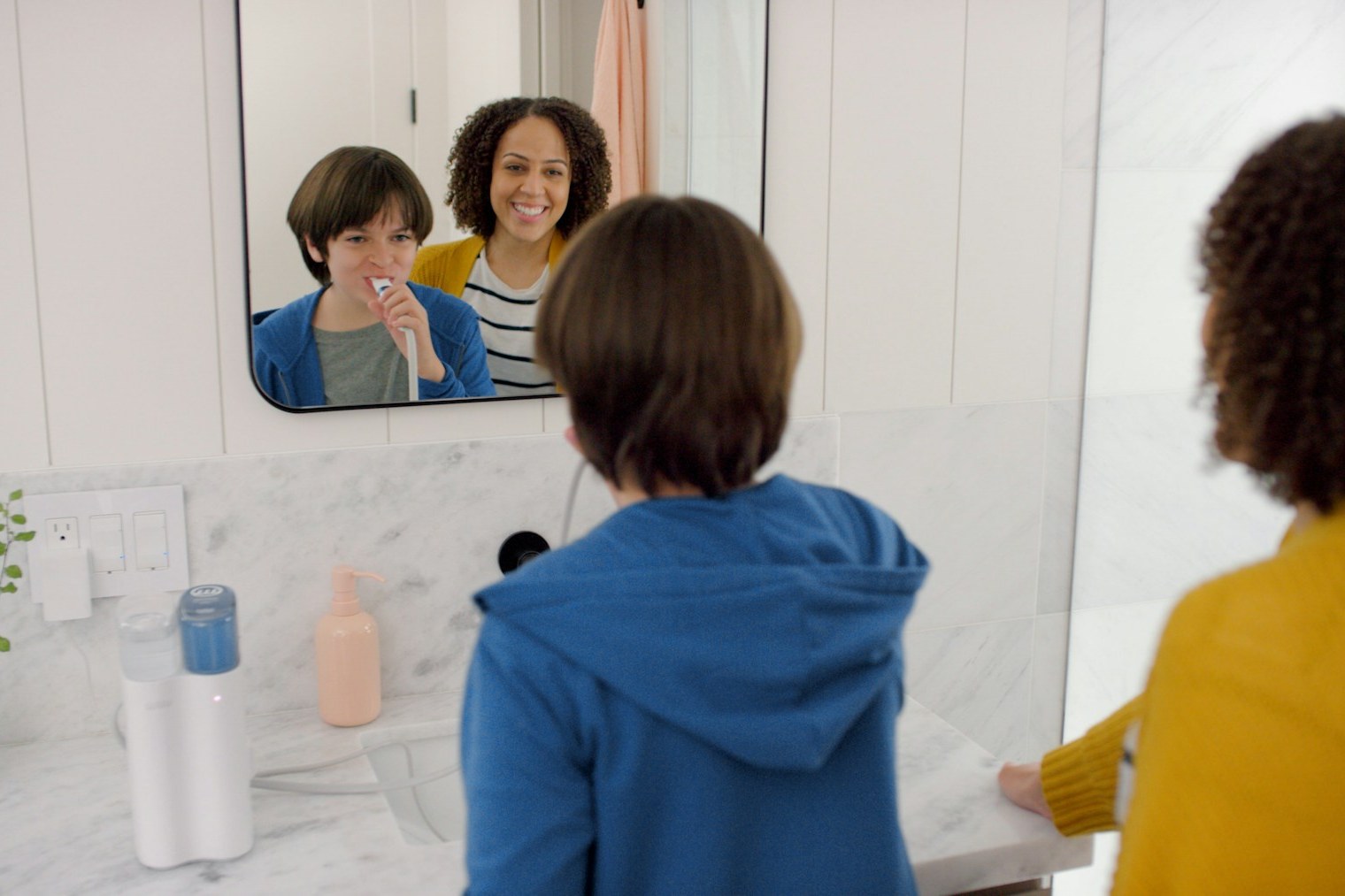
Not describing the dentist as something scary at home (including phrases like ‘it won’t hurt’ or ‘they won’t give you an injection’) makes the first visit easier. It is enough to describe the visit as something calm, short and ordinary.
Dental care by age
| Age | What happens with the teeth? | What is done? |
|---|---|---|
| 6 months – 1 year | The first baby teeth come through | First check-up; start brushing with a soft brush |
| 1 – 3 years | Most of the baby teeth come through | A rice-grain-sized smear of fluoride toothpaste; watch out for bottle decay |
| 3 – 6 years | All 20 baby teeth are in | A pea-sized amount of toothpaste; fluoride application |
| 6 – 7 years | The first permanent molars come through | Fissure sealants; early orthodontic assessment |
| 7 – 12 years | Baby teeth are replaced | Monitoring alignment and jaw development |
When and in what order do baby teeth come through?
Baby teeth usually start coming through between 6 and 10 months and all 20 are in by about age 3. In most babies, the first teeth to appear are the lower front central incisors.
The timing can be a few months earlier or later. The general order is upper and lower central incisors, lateral incisors, first baby molars, canines and finally second baby molars. As well as chewing and speaking, baby teeth hold space for the permanent teeth coming underneath; that is why the cleaning habit should start with the first tooth.
| Tooth | Lower jaw | Upper jaw |
|---|---|---|
| Central incisor | 6-10 months | 8-12 months |
| Lateral incisor | 10-16 months | 9-13 months |
| First baby molar | 14-18 months | 13-19 months |
| Canine | 17-23 months | 16-22 months |
| Second baby molar | 23-31 months | 25-33 months |
The times in the table are average values published by the American Dental Association (ADA); differences of a few months are normal.
To prevent decay in baby teeth
- Don’t put your child to sleep with a bottle. Milk or juice left on the teeth overnight increases the risk of decay.
- Don’t spread sugary snacks between meals. How often sugar is eaten matters as much as how much.
- Finish the brushing yourself. Children usually can’t clean their teeth well enough on their own until about 7–8 years old.
- Don’t skip preventive care. Fluoride and fissure sealants lower the risk of decay.
If you notice decay or pain in a baby tooth, don’t wait thinking it will be replaced anyway. Untreated decay can lead to pain, an abscess and problems with the permanent tooth underneath.
When do baby teeth fall out and permanent teeth come through?
Baby teeth usually start to be replaced around age 6 and this continues until 12-13. The first teeth to become loose are often the lower front incisors.
As the permanent tooth moves up through the jawbone, it dissolves the root of the baby tooth; the baby tooth with the dissolved root becomes loose and falls out. In the same period, the first permanent molar (the 6-year molar) comes through at the very back without replacing any baby tooth.
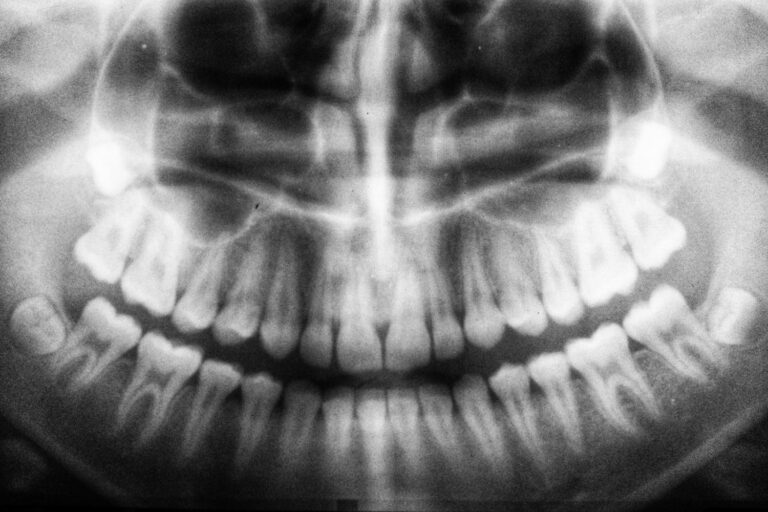
This period, when there are both baby and permanent teeth in the mouth, is called the mixed dentition. Regular check-ups and X-rays when needed are useful to make sure the teeth come through in the right place and at the right time.
The 6-year molars are permanent, but can be neglected because they are mistaken for baby teeth. They need careful brushing because they stay for life.
If your child is very scared
The aim of the first visit is to get to know each other; the child is not forced into treatment. For children who need treatment on many teeth or who can’t cooperate, sedation or treatment under general anaesthesia can be planned by joint decision of the paediatric dentist and the anaesthetist.
How is dental treatment done for children under sedation or general anaesthesia?
For children who are very anxious, can’t cooperate in the chair or need treatment on many teeth, sedation or general anaesthesia is an option. This way treatment can be completed without tiring or frightening the child.
For children who can cooperate, local anaesthesia is usually enough. When staying in the chair isn’t possible because the child is very young or has special needs, a deeper sleep is needed. At our clinic, sedation and general anaesthesia for children are given by an anaesthetist.
Most procedures planned in advance with X-rays, such as fillings, root canal treatment, extractions or crowns for baby teeth, can be done in a single session. Throughout the procedure, the anaesthetist monitors the child’s pulse, oxygen level and breathing.
- The child is drowsy and calm, and can be woken
- Can respond to simple instructions
- Preferred for short procedures and mild anxiety
- The child is fully asleep
- Doesn’t feel or remember the procedure
- Used for children who need a lot of treatment or can’t stay in the chair
Let’s plan your child’s first examination together
Saturday appointments can also be arranged to fit around school hours.
You may also want to read: What does a paediatric dentist do and when to go?.

Carries out check-ups, preventive care and treatment for children at our clinic.
Frequently asked questions
When should I first take my child to the dentist?
The first check-up is recommended when the first tooth comes through, or by around age 1 at the latest.
Should baby teeth be treated if they will be replaced?
Yes. Baby teeth are needed for chewing, speaking and holding space for the teeth coming underneath. Untreated decay can also affect the permanent teeth.
Is fluoride toothpaste safe for children?
It is safe when used in the right amount for the child’s age: a rice-grain-sized smear up to age 3, and a pea-sized amount from 3 to 6. Supervise brushing so the child doesn’t swallow the toothpaste.
Does thumb-sucking harm the teeth?
If it continues for a long time it can affect the alignment of the front teeth and jaw growth. Stopping around age 4 is usually recommended.
How often should we come for check-ups?
A check-up every 6 months is recommended for most children. If the risk of decay is high, the interval can be shortened.
What is bottle decay?
Decay that develops quickly on the front teeth when a baby is fed sugary milk, juice or sweetened drinks, especially at night. Wiping or brushing the teeth after night feeds is important.
Can a baby tooth have root canal treatment?
Yes. If decay has reached the nerve and there is still time before the tooth falls out, a baby tooth can have root canal treatment too. This prevents infection and keeps the space for the permanent tooth.
When should children start brushing their teeth?
When the first baby tooth appears. Up to age 3, an adult should brush the teeth with a soft baby brush and a rice-grain-sized smear of fluoride toothpaste.
This article is for general information and does not replace an examination. The care and treatment that suit your child are decided after an examination.