
Our treatments · Gum treatment
Gum Treatment in Aydın
Treatment methods for bleeding, receding and inflamed gums. Which one you need is decided at the examination, based on the condition of your gums.
- First stepGum examination
- During the procedureLocal anesthesia if needed
- Follow-upRegular check-ups

- Periodontiston our team
- Local anesthesiawhen needed
- Open on Saturdays10:00–18:00
- Free parkingEfeler, Şair Ömer Boulevard
What’s on this page?
Gum treatment in brief
Gum treatment is the general name for procedures that clear inflammation in the gums, protect tissue that has been lost and, when needed, correct the shape of the gums. In the early stage, cleaning and proper care are usually enough; in advanced cases, deep cleaning or gum surgery may be needed.
For more information on the causes and stages of gum disease, see our periodontics page. On this page we explain the treatment methods.
Which symptoms call for gum treatment?
An examination is recommended if you have any of the following:
Bleeding gumsGums that bleed when brushing or flossing.
Receding gumsTeeth that look longer, with the root surface exposed.
Swelling and rednessRed, swollen and tender gums.
Bad breathA bad smell or taste that does not go away despite brushing.
Loose teethMovement in the teeth or gaps opening between them.
SensitivitySensitivity to cold because of receding gums.
Gum treatment methods
Treatment is not the same for every patient. The methods used most often:
Scaling
Removing plaque and tartar from the tooth surface. It is the first treatment for gum inflammation.
Details →Deep cleaning (curettage)
Cleaning tartar and inflamed tissue from inside the gum pocket under local anesthesia and smoothing the root surfaces.
Flap surgery
In deep pockets, the gum is opened slightly so the roots can be cleaned under direct view.
Gum grafts
Covering receding gums with tissue taken from another area of the mouth.
Gingivectomy
Reshaping excess or overgrown gum tissue.
Details →Maintenance therapy
Check-ups and cleanings at set intervals after treatment.
Which method suits whom?
The decision is made at the examination based on pocket depth, bone loss and your complaint. To give a general idea:
ConditionCommon treatment
Bleeding, mild swelling→Scaling and improving home care
Deepened gum pockets→Deep cleaning (curettage)
Pockets that remain despite deep cleaning→Flap surgery
Receding gums→Treating the cause, a gum graft if needed
Excess gum tissue→Gingivectomy
Gum treatment is not a one-off procedure; keeping the result depends on home care and regular check-ups.
Gum treatment step by step
Examination and measurementDay 1
Cleaningfirst sessions
Re-assessmentabout 4–6 weeks later
Surgery if neededas required
Maintenance therapymostly every 3–6 months
- Examination and measurementDay 1
The gum pockets are measured and bleeding and looseness are checked. X-rays are taken to see bone loss.
- Cleaningfirst sessions
Scaling is done; if needed, deep cleaning is planned area by area.
- Re-assessmentabout 4–6 weeks later
How the gums have responded to cleaning is checked.
- Surgery if neededas required
For deep pockets that remain or for receding gums, surgical options are discussed.
- Maintenance therapymostly every 3–6 months
The result is maintained with check-ups and cleanings.
Who is on your treatment team?
Gum treatments are planned and carried out by our periodontist, Dr. Ömer Kazım Toprak.
 MC Multi Clinic team · Efeler, Aydın

Periodontist
Gum examination, deep cleaning, gum surgery and preparation before implants.

Anesthesiologist
Sedation when needed for patients with dental anxiety.
Inside the clinic

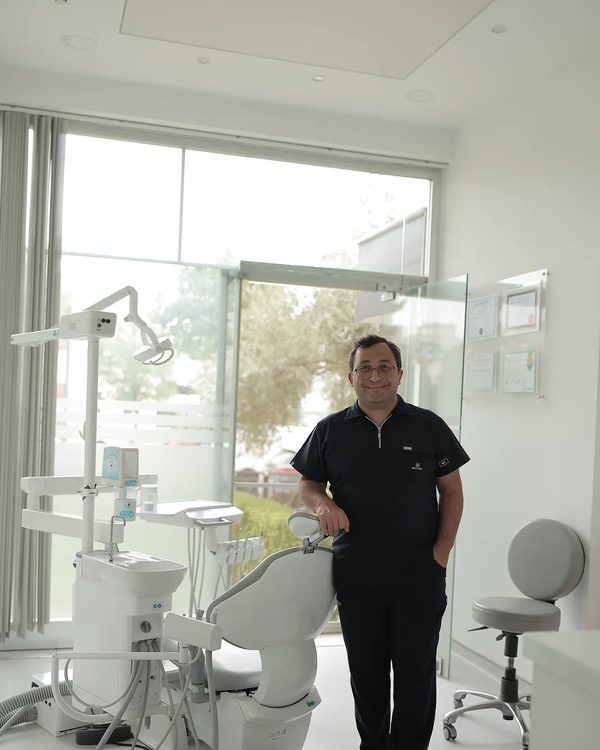


If your gums bleed or are receding, let’s start with an examination
- Weekdays 10:00–19:00 · Saturday 10:00–18:00
- Şair Ömer Boulevard No:1, Efeler / Aydın
What affects the cost of gum treatment?
It would not be right to give an exact figure without an examination. The main factors are:
Stage of the diseasePocket depth and bone loss
Area to be treatedOne area or the whole mouth
Need for surgeryWhether a flap or graft is needed
Follow-upHow often maintenance therapy is needed
What to watch out for after gum treatment
First day
- Do not eat until the anesthesia wears off
- Avoid hot and spicy foods
- Do not smoke
First week
- Brush gently with a soft brush
- Use the mouthwash your dentist recommends
- Call the clinic if bleeding or swelling does not go away
Long term
- Brush twice a day and use dental floss or an interdental brush
- Don’t miss check-up and cleaning appointments
- Quitting smoking helps gum health a great deal
MC Multi Clinic, Efeler

Getting here and facilities
- AddressGirne Mah., Şair Ömer Boulevard No:1, Efeler / Aydın
- Opening hoursWeekdays 10:00–19:00, Saturday 10:00–18:00
- ParkingFree parking
- AccessWheelchair-accessible entrance
- PaymentCredit card and contactless payment
Diabetes, pregnancy or medication you take regularly can affect gum health; be sure to mention them at the examination.
Common questions about gum treatment
Will bleeding gums stop on their own?
With mild inflammation, bleeding may lessen with proper brushing and flossing. If bleeding continues, there may be tartar or deepened pockets underneath; an examination is recommended.
Do receding gums grow back?
Receded gums do not return to their original position on their own. By treating the cause, further recession can be stopped; in suitable cases the area can be covered with a gum graft.
Is gum treatment painful?
Scaling mostly does not need anesthesia. Deep cleaning and surgical procedures are done under local anesthesia; there may be sensitivity for a few days afterwards.
What is curettage?
Cleaning tartar and inflamed tissue from inside the gum pocket under local anesthesia and smoothing the root surfaces.
How many sessions does gum treatment take?
It depends on the stage of the disease. Cleaning is done in one or a few sessions, followed by a re-assessment 4–6 weeks later.
Can gum disease cause tooth loss?
If untreated, the bone that holds the teeth wears away over time and the teeth can become loose. Early treatment and regular check-ups reduce this risk.
How can I make an appointment?
To make an appointment you can call +90 256 212 46 46, message our WhatsApp line or fill in the appointment form on the website. The clinic is open weekdays 10:00–19:00 and Saturday 10:00–18:00.
Treating dentistDr. Ömer Kazım ToprakPeriodontist · MC Multi ClinicLast updated: October 2026The information on this page is for general guidance and does not replace an examination.
You may also be interested in


MC Multi Clinic
Ein Team von Zahnärzten verschiedener Fachrichtungen, das in Efeler, Aydın, zusammenarbeitet.
Behandlungen
Unsere Zahnärzte
© 2026 Multi Clinic. Alle Rechte vorbehalten.
Web, SEO und GEO Serkan Yıldız
© Copyright 2026 Multi Clinic. Alle Rechte vorbehalten.
Software, Design und SEO Serkan Yıldız