
Our treatments · Root canal retreatment
Root Canal Retreatment in Aydın
In a tooth that has had root canal treatment but has not healed or has become inflamed again, removing the old root canal filling and redoing the treatment.
- Number of sessionsMostly 2 or more
- During the procedureLocal anesthesia
- First stepExamination and X-rays

- Endodontiston our team
- Follow-up with X-raysbefore and after treatment
- Open on Saturdays10:00–18:00
- Free parkingEfeler, Şair Ömer Boulevard
What’s on this page?
Root canal retreatment in brief
Root canal treatment heals without problems in most teeth. In some teeth, however, the inflammation may not clear completely, or it may return years later. In that case, retreatment is considered before extracting the tooth.
In retreatment the old root canal filling is removed, and the canals are cleaned, disinfected and filled again. It takes more time than the first treatment, so it is usually done by an endodontist.
Why does root canal treatment sometimes need to be redone?
The most common reasons:
A canal that was not cleanedA canal that was missed or could not be cleaned to the end in the first treatment.
LeakageBacteria entering the canal again when the filling or crown on top breaks down.
New decayNew decay in a root-canal-treated tooth that reaches the canal.
Cracks or fracturesCracks that develop in the tooth over time.
Symptoms that may point to retreatment
Sometimes there are no symptoms and the problem is noticed on a check-up X-ray.
Pain returning
Pain in a root-canal-treated tooth, when chewing or on its own.
Swelling or discharge
Swelling around the tooth, a pimple-like bump or a bad taste.
Sensitivity when biting
Pain when pressure is put on the tooth.
Infection on an X-ray
An image of infection at the root tip that does not go away or is growing.
Retreatment, root-end surgery or extraction?
The decision is made at the examination, based on how much sound tooth structure is left, the root anatomy and the state of the infection.
Root canal retreatment
- ✓Natural tooth: Kept
- •How is it done? From inside the tooth, by removing the old filling
- •When is it suitable? If the canals can be reached again
Root-end surgery
- ✓Natural tooth: Kept
- •How is it done? With a small surgical procedure through the gum
- •When is it suitable? If retreatment is not possible or has not been enough
Extraction and implant
- ✕Natural tooth: Lost
- •How is it done? The tooth is extracted and replaced with an implant
- •When is it suitable? If the tooth cannot be saved
If the tooth cannot be saved, options such as an implant are discussed together at the examination.
Root canal retreatment step by step
Examination and X-raysDay 1
Removing the restorationfirst session
Removing the old fillingfirst session
Medication in the canalbetween sessions
Filling the canalsfinal session
Restoration and check-upwithin 1–2 weeks, then 6–12 months
- Examination and X-raysDay 1
The location and extent of the infection, the state of the old filling and the root anatomy are assessed. 3D imaging is done if needed.
- Removing the restorationfirst session
The crown or filling on the tooth is removed to reach the canals.
- Removing the old fillingfirst session
Under local anesthesia the old root canal filling is removed and the canals are cleaned again.
- Medication in the canalbetween sessions
If needed, medication is placed in the canal to let the infection settle and the tooth is closed with a temporary filling.
- Filling the canalsfinal session
The cleaned canals are filled again.
- Restoration and check-upwithin 1–2 weeks, then 6–12 months
The tooth is protected with a permanent filling or crown; healing is followed up with X-rays.
Who is on your treatment team?
Retreatments are planned and carried out by our endodontist.
 MC Multi Clinic team · Efeler, Aydın

Endodontist
Root canal treatment, retreatment and treatment of complex root anatomy.

Anesthesiologist
Sedation when needed for patients with dental anxiety.
Inside the clinic
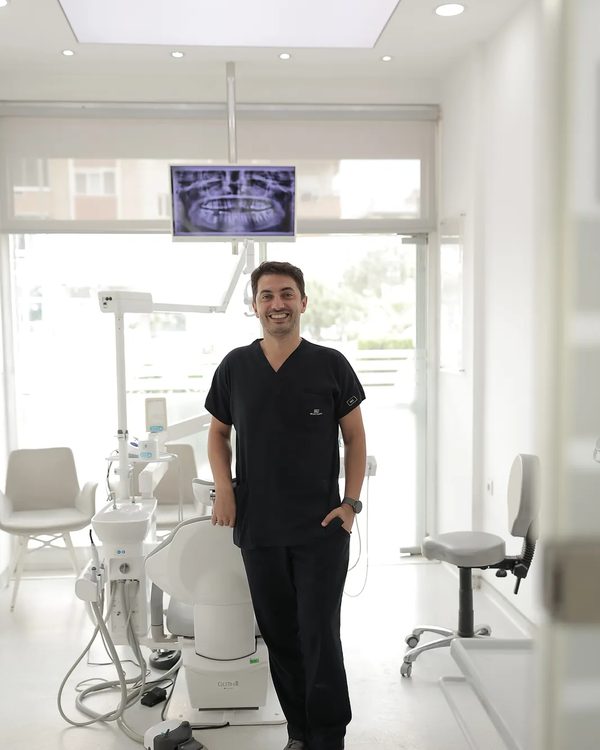


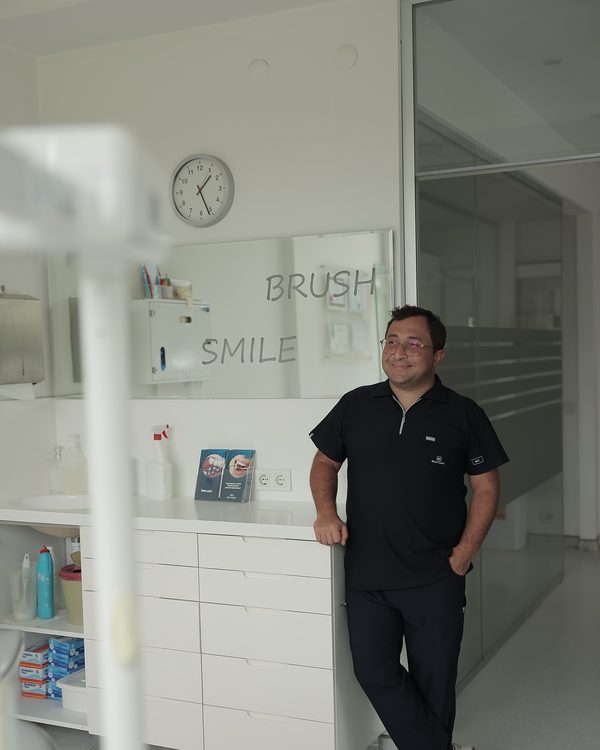
If your root-canal-treated tooth hurts again, let’s start with an examination
- Weekdays 10:00–19:00 · Saturday 10:00–18:00
- Şair Ömer Boulevard No:1, Efeler / Aydın
What affects the cost of root canal retreatment?
It would not be right to give an exact figure without an examination and X-rays. The main factors are:
Position of the toothFront tooth, premolar or molar
Number of canalsThe number and anatomy of canals to be retreated
State of the old fillingHow difficult it is to remove the old filling or a post in the canal
RestorationThe need for a new filling or crown
The limits of retreatment
Retreatment is a good option for keeping a tooth, but it does not give the same result in every tooth.
Healing timeInfection at the root tip may take months to settle; that is why check-up X-rays matter.
FragilityA retreated tooth may be more fragile; a crown is usually recommended.
Canals that cannot be reachedIn some teeth it may not be possible to reach the canals again; in that case other options are discussed.
Temporary sensitivityThere may be sensitivity when chewing for a few days after the sessions.
MC Multi Clinic, Efeler

Getting here and facilities
- AddressGirne Mah., Şair Ömer Boulevard No:1, Efeler / Aydın
- Opening hoursWeekdays 10:00–19:00, Saturday 10:00–18:00
- ParkingFree parking
- AccessWheelchair-accessible entrance
- PaymentCredit card and contactless payment
If you had root canal treatment at another clinic, bringing your old X-rays makes the assessment easier.
Common questions about root canal retreatment
What is root canal retreatment?
In a tooth that has had root canal treatment but has not healed or has become inflamed again, the old root canal filling is removed and the canals are cleaned and filled again.
Why does a root-canal-treated tooth hurt again?
The most common reasons are a canal that was not cleaned, leakage when the filling on top breaks down, new decay or a crack in the tooth.
Is retreatment painful?
The procedure is done under local anesthesia, so you do not feel pain during it. There may be sensitivity for a few days after the sessions.
How many sessions does it take?
It usually takes longer than the first root canal treatment; 2 or more sessions are generally needed.
Can retreatment be done on a crowned tooth?
Yes. The crown is usually removed or opened through to reach the canals; a new crown may be needed after treatment.
Could I have the tooth extracted instead of retreatment?
The gap left by an extracted tooth needs to be filled. If it is possible to keep the natural tooth, retreatment is usually considered first.
How can I make an appointment?
To make an appointment you can call +90 256 212 46 46, message our WhatsApp line or fill in the appointment form on the website. The clinic is open weekdays 10:00–19:00 and Saturday 10:00–18:00.
Treating dentistSalih Danışman, DDSEndodontist · MC Multi ClinicLast updated: October 2026The information on this page is for general guidance and does not replace an examination.
You may also be interested in



MC Multi Clinic
Ein Team von Zahnärzten verschiedener Fachrichtungen, das in Efeler, Aydın, zusammenarbeitet.
Behandlungen
Unsere Zahnärzte
© 2026 Multi Clinic. Alle Rechte vorbehalten.
Web, SEO und GEO Serkan Yıldız
© Copyright 2026 Multi Clinic. Alle Rechte vorbehalten.
Software, Design und SEO Serkan Yıldız