In this article
A dental cyst is a fluid-filled sac that usually develops at the tip of a tooth root or around an impacted tooth. It often grows slowly without symptoms and is noticed on an X-ray taken for another reason. Treatment ranges from root canal treatment to surgical removal of the cyst, depending on its source and size.
A cyst doesn’t disappear on its own. Small lesions caused by a tooth can sometimes heal after root canal treatment; cysts that grow are removed surgically. The decision is made with an X-ray and, if needed, a CT scan.
- The most common types are root tip cysts and cysts linked to impacted teeth.
- Most cysts have no symptoms; swelling, pain or shifting teeth may appear late.
- The size of the cyst and its relationship to nearby structures are assessed with a CT scan.
- The surgery is usually done in the clinic under local anaesthesia.
Types of dental cyst
Root tip (radicular) cyst
A cyst that develops from infection at the root tip of a tooth that has died because of deep decay or an injury. It is the most common type.
Cyst linked to an impacted tooth (dentigerous cyst)
A cyst that develops around the crown of a tooth that hasn’t come through, usually a wisdom tooth or canine.
Are a jaw cyst and a dental cyst the same thing?
Usually they mean the same thing. Most cysts in the jawbone come from teeth; that is why a dental cyst growing in the bone is also called a jaw cyst.
When a tooth’s nerve becomes inflamed after deep decay or an injury, an inflamed sac can form at the root tip. There are also jaw cysts of developmental origin that have nothing to do with the teeth; these are less common.
- It is the most common type
- It forms at the root tip of a tooth with an inflamed nerve
- Treatment involves root canal treatment, root tip surgery or extraction
- It develops independently of decay
- It usually grows slowly without symptoms
- It is usually noticed by chance on an X-ray or CT scan
What are the symptoms of a dental cyst?
It may cause no symptoms
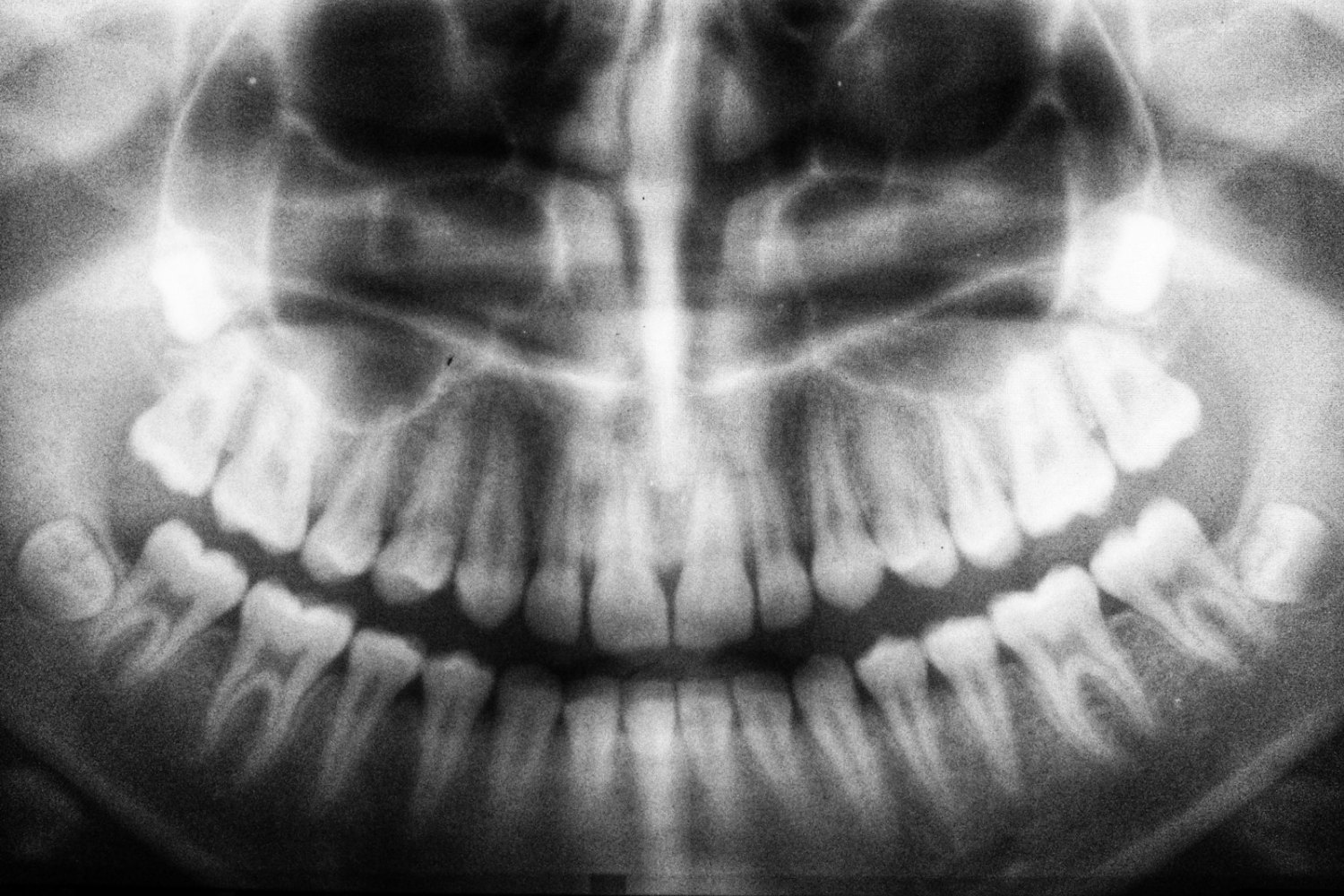
Many cysts only show as a dark area on a panoramic X-ray.
Swelling and pain
If the cyst becomes infected or grows, there may be swelling and pain in the gum or jaw.
Teeth shifting
A growing cyst can push neighbouring teeth and make them loose.
Discharge and a bad taste
Infected cysts can cause discharge from the gum and a bad taste in the mouth.
What happens if a dental cyst bursts or pus drains?
An infected cyst can open from the gum into the mouth and cause a bad-tasting discharge. Because the pressure drops, the pain may ease for a while.
But this doesn’t mean the problem has gone. Unless the source tooth or the sac in the bone is treated, the discharge may stop for a while and then start again, and the cyst may keep growing.
If you notice a pimple-like swelling on the gum that drains pus (a fistula), have an examination even if you have no pain.
Diagnosis: X-rays and CT scans
A cyst can’t be diagnosed by looking. A panoramic X-ray is taken first. A 3D CT scan (CBCT) may be requested to see the size of the cyst and its distance from the sinus and nerve. The surgical plan is made from these images.
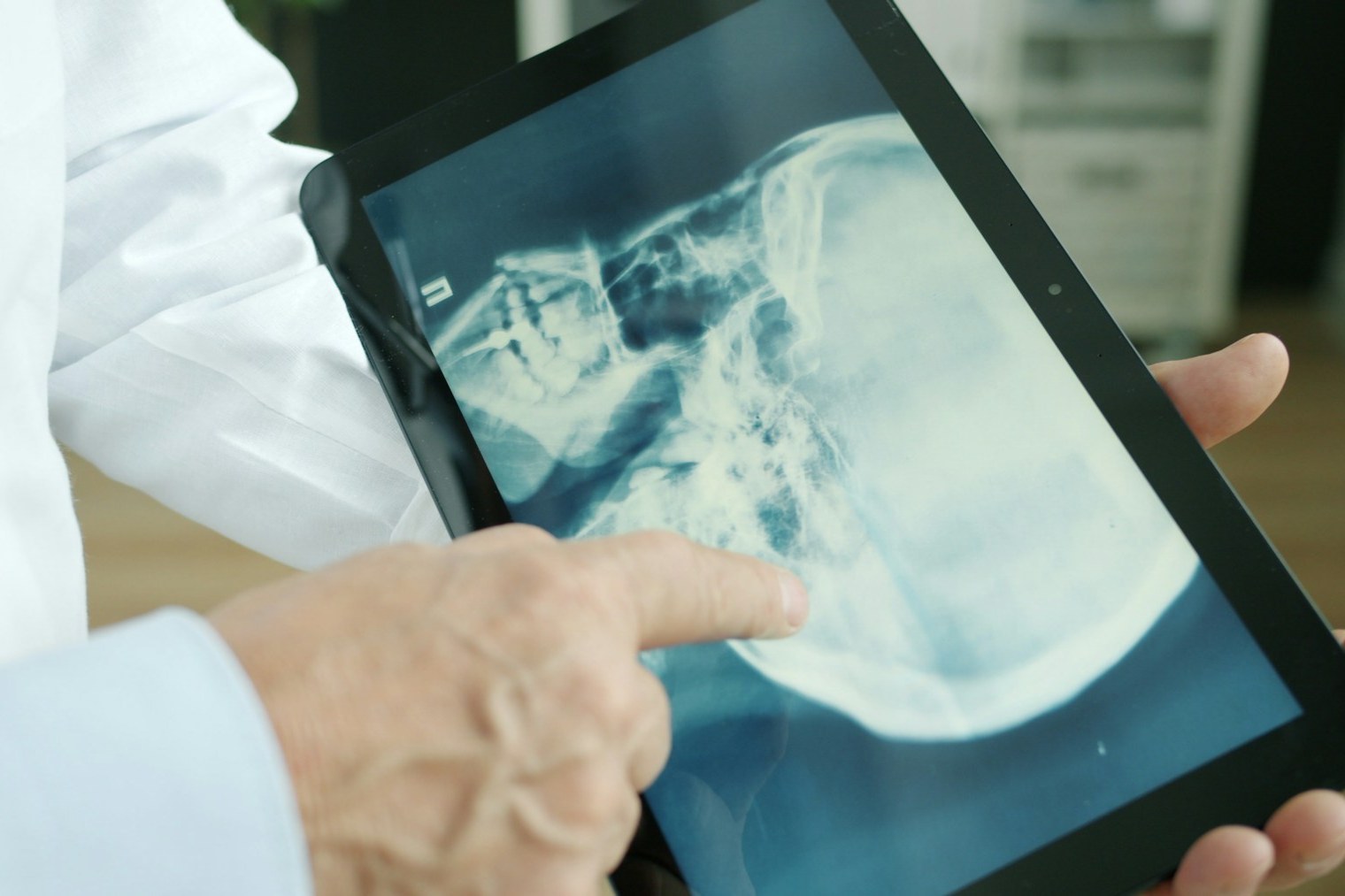
At MC Multi Clinic, panoramic X-rays and CT scans are taken in the clinic; you don’t need to go to a separate imaging centre.
Treatment options
| Condition | Treatment often considered |
|---|---|
| Small, tooth-related root tip lesion | Root canal treatment and a follow-up X-ray |
| Lesion that hasn’t healed despite root canal treatment | Root tip surgery (apicoectomy) |
| Growing cyst or cyst linked to an impacted tooth | Surgical removal of the cyst and, if needed, of the impacted tooth |
| Large bone cavity after a cyst | Filling with bone graft if needed |
How is cyst surgery done?
- 1Numbingfirst
The area is numbed with local anaesthesia; sedation with an anaesthetist can be planned for anxious patients.
- 2Removing the cystprocedure
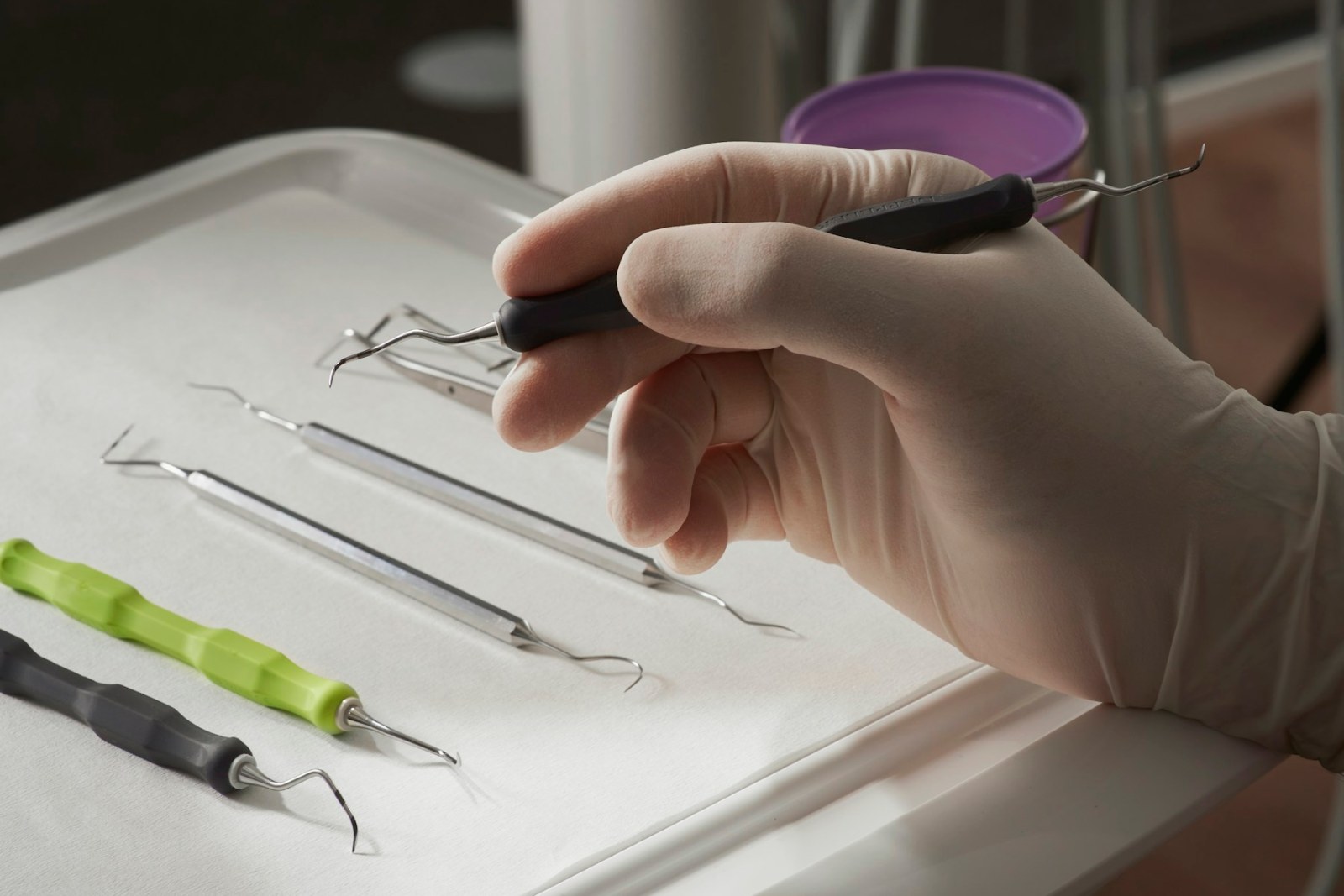
The gum is opened slightly and the cyst sac is cleaned out of the bone.
- 3Additional procedures if neededsame session
The root tip is cleaned and bone graft may be placed in the cavity.
- 4Stitches and examinationend of the session
The area is stitched; if the dentist considers it necessary, the removed tissue is sent for pathology examination.
- 5CheckAfter 7–10 days and in the following months
The stitches are removed and the bone filling in is followed up with X-rays.
At our clinic, cyst surgery is performed by our periodontist; if the cyst comes from a tooth, root canal treatment is planned together with our endodontist.
Who performs cyst surgery, and is general anaesthesia needed?
Cyst surgery is performed by dentists trained in oral surgery. At our clinic, cyst surgery and oral surgery procedures are performed by our periodontist.
Most cyst surgery is done under local anaesthesia, which numbs only the area concerned. For patients with high dental anxiety or a strong gag reflex, sedation or general anaesthesia can be given by an anaesthetist. If the size of the cyst requires a hospital setting, the patient is referred to the appropriate centre.
Periodontics
The dental specialty that deals with diseases of the gum and bone tissues around the teeth, and performs surgery and implant placement in these areas.
After surgery
- Bite on the gauze for 30 minutes; do not rinse or spit
- Apply cold to the outside at intervals
- Eat lukewarm, soft foods
- Take the medicines your dentist prescribes regularly
- Come for your stitch check-up
- Brush your other teeth without disturbing the surgical area
- Don’t miss your follow-up X-rays
- Call the clinic if pain or swelling increases or you have a fever
What determines the cost of dental cyst surgery?
Because every cyst is different, a cost can’t be given without an examination and imaging. The main factors that determine the cost are:
| Factor | Why does it make a difference? |
|---|---|
| Size and location of the cyst | Deep cysts, or cysts close to the sinus and nerve, need more extensive planning. |
| Root canal treatment and root tip surgery | Additional procedures may be needed to save the tooth. |
| Bone graft and membrane | Bone support may be needed for large cavities. |
| Impacted tooth removal | If the cyst is linked to an impacted tooth, the tooth is also removed. |
| Pathology examination | If tissue is sent for examination, it is a separate item. |
| Sedation | Can be given with an anaesthetist for anxious patients. |
A dental cyst is often silent; regular dental check-ups and X-rays are the easiest way to catch it early.
Does private health insurance cover cyst surgery?
It depends on your policy. Some policies cover surgical dental procedures within certain limits; in others, dental treatment is excluded.
Our clinic has an agreement with Allianz. Because it is a surgical procedure, prior approval (pre-authorisation) from the insurer may be needed; this is handled together at reception.
- 1Examination and imagingStep 1
The size of the cyst is determined with an X-ray or CT scan and the treatment plan is made.
- 2Policy checkStep 2
The plan is sent to the insurer and the cover is checked.
- 3Approval and appointmentStep 3
Once approval is received, a surgery appointment is given.
Has a cyst shown up on your X-ray?
Let us look at the images together and explain the options and process to you.

Performs cyst surgery, impacted tooth removal, implants and bone grafts at our clinic.
Frequently asked questions
Will a dental cyst go away on its own?
No. Small, tooth-related root tip lesions can heal after root canal treatment; cysts that grow are removed surgically.
Is dental cyst surgery painful?
The surgery is done under local anaesthesia, so you feel no pain during the procedure. There may be mild pain and swelling for a few days afterwards.
How long does cyst surgery take?
It depends on the size of the cyst and any additional procedures; most operations take less than an hour.
Does a tooth with a cyst have to be extracted?
Not always. Where possible, the tooth is kept with root canal treatment and root tip surgery.
Can a cyst come back?
When a cyst is removed completely, the chance of it coming back is low. That is why follow-up X-rays after surgery matter.
Is there facial swelling after cyst surgery?
Because it is a surgical procedure, mild swelling may occur and is expected. Applying cold to the outside at intervals on the first day helps reduce swelling.
Can dental cyst surgery be done during pregnancy?
Non-urgent surgery is usually postponed until after the birth. If there is severe pain or infection, treatment can be given at a suitable time after consulting the obstetrician.
If a tooth with a cyst is extracted, can an implant be placed at the same time?
It depends on the damage the cyst has done to the bone. If there is enough bone, it is possible in some cases; if bone loss is significant, a bone graft is placed first and healing is awaited, then the implant is planned.
This article is for general information and does not replace an examination. The cost is given in writing after an examination and imaging.