In this article
Oral and maxillofacial surgery covers a wide range, from procedures inside the mouth such as removing impacted teeth, cyst surgery and implants to jaw fractures and jaw surgery. Most procedures inside the mouth are done in the clinic under local anaesthesia or sedation; conditions such as jaw fractures, jaw surgery (orthognathic surgery) and tumours are planned in a hospital.
If surgery has been recommended to you in Aydın, knowing where to go depending on the scope of the procedure saves you time.
- Impacted teeth, cysts, implants, bone grafts and sinus lifts are mostly done in the clinic.
- Jaw fractures, jaw surgery and tumours are treated in the relevant hospital departments.
- Before surgery, the position of structures such as nerves and the sinus is assessed with a CT scan.
- Before the procedure, tell the dentist about the medicines you take, especially blood thinners.
What is oral and maxillofacial surgery?
Oral and maxillofacial surgery
The dental specialty that deals with the surgical treatment of disease, injury and developmental problems of the teeth, jawbones and soft tissues of the mouth.
Some surgical procedures in the mouth are also part of the training in other specialties. For example, periodontists perform implants, bone grafts, sinus lifts and gum surgery, and in many cases impacted tooth and cyst surgery as well.
Oral surgery procedures that can be done in the clinic
Impacted tooth removal
Surgical removal of wisdom teeth that haven’t come through and impacted canines.
Cyst surgery
Cleaning out cysts that develop at the root tip or around an impacted tooth.
Bone graft and sinus lift
Strengthening bone that isn’t sufficient for an implant.
Implant
Placing implants in the jawbone for missing teeth.
Gum surgery
Treating deep pockets and adjusting the gum line.
Procedures under sedation
Sedation with an anaesthetist for anxious patients.
At MC Multi Clinic, oral surgery procedures are performed by our periodontist; sedation is given by our anaesthetist. There is no oral and maxillofacial surgeon at our clinic; for cases needing a hospital setting, you are referred to the appropriate centre.
Which conditions are treated in hospital?
Conditions that need an operating theatre, general anaesthesia and a hospital stay are handled by university hospitals or hospitals with an oral and maxillofacial surgery department:
- Done under local anaesthesia or sedation
- Impacted teeth, cysts, implants, bone grafts
- You go home the same day
- Needs general anaesthesia and an operating theatre
- Jaw fractures, jaw surgery (orthognathic surgery), tumours
- There may be a hospital stay and follow-up after surgery
If after a hard blow to the face or jaw you can’t close your mouth, or there is a change in the shape of the jaw, severe pain or numbness, go to the emergency department without waiting.
How are impacted tooth and cyst surgery done?
- 1Examination and imagingfirst appointment
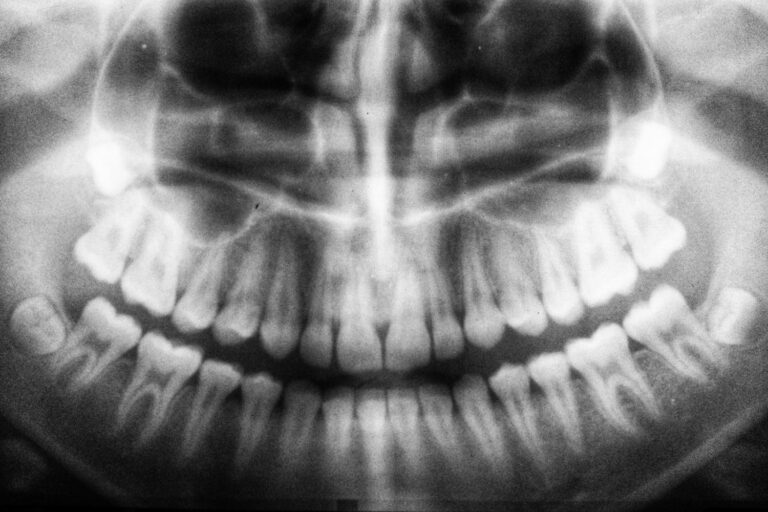
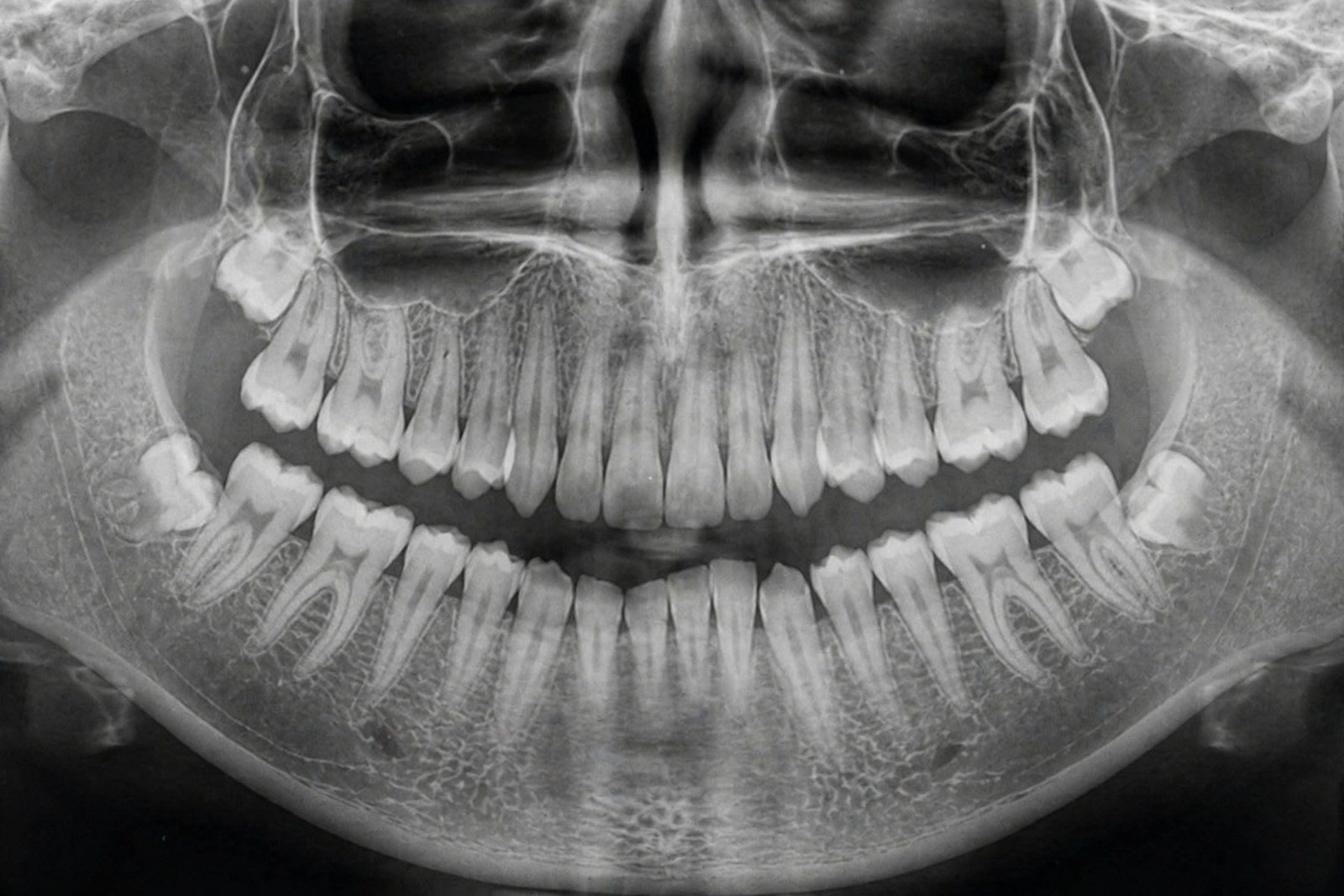
The position of the tooth or cyst is determined with a panoramic X-ray and, if needed, a CT scan.
- 2Numbingon the day
The area is numbed with local anaesthesia; sedation can be planned if you wish.
- 3Proceduremostly 30–60 minutes
The gum is opened, a little bone is removed if needed, and the tooth or cyst is taken out.
- 4Stitches and check-up7–10 days later
The area is stitched and the stitches are removed at the check-up.
Should every impacted wisdom tooth be removed?
No. Wisdom teeth that are in the right position, fully through, can be cleaned and don’t harm their surroundings can stay in the mouth under monitoring. Removal is recommended for teeth that press on the neighbouring tooth, cause repeated infection or carry a risk of cysts.
Because wisdom teeth are the last to come through, they often don’t find enough room and can stay in the bone lying horizontally or at an angle. The decision to remove them is made after assessing the tooth’s position and its relationship to nearby structures on an X-ray or CT scan.
Problem-free position
Teeth that are fully through, can be cleaned with a brush and take part in chewing are usually not removed.
Repeated infection
Food collects under the gum over a partly erupted tooth; painful infection (pericoronitis) can keep coming back.
Harm to the neighbouring tooth
An impacted tooth lying horizontally can press on the root of the molar in front of it and cause decay or root resorption.
Why is a CT scan taken before surgery?
A panoramic X-ray shows the teeth and jaw in one plane. A CT scan (CBCT) shows in three dimensions how far an impacted tooth is from the nerve in the lower jaw, or from the sinus in the upper jaw. The dentist plans the surgery based on this information.
What is the difference between a surgical extraction and a normal extraction?
In a normal extraction, a tooth visible in the mouth is removed from its socket without cutting the gum. In a surgical extraction, for a tooth under the gum or in the bone, the gum is opened, a small amount of bone is removed if needed, or the tooth is divided into pieces and removed.
Both procedures are done under local anaesthesia and you usually feel no pain during them. Healing after a surgical extraction can take a little longer than after a normal extraction.
- The tooth is fully through and visible
- Stitches are usually not needed
- Healing is usually quicker
- The tooth is partly or fully impacted
- The gum is opened and stitched at the end of the procedure
- If needed, closeness to the nerve canal is assessed in advance with a CT scan
Before and after surgery
- Tell the dentist about the medicines you take, especially blood thinners
- Mention conditions such as diabetes or high blood pressure
- For local anaesthesia, eat beforehand unless the dentist tells you otherwise
- If sedation is planned, follow the fasting time
- Bite on the gauze for 30 minutes and don’t spit
- On the first day, apply cold to the outside at intervals
- Eat lukewarm, soft foods and don’t smoke
- Take your medicines as advised and come to your check-up
Are bleeding and swelling normal after an extraction?
Yes. A little blood in the saliva in the first 24 hours and swelling that increases over the next 2-3 days are a natural part of healing. After procedures involving the bone, such as removing an impacted tooth, swelling can be more noticeable.
If bleeding doesn’t stop, swelling increases after a few days or you have a fever, you should let your clinic know.
- 1GauzeFor bleeding
The gauze placed on the extraction site is bitten firmly for as long as the dentist says, usually about half an hour.
- 2Cold compressFor swelling
On the first day, cold is applied to the cheek from the outside at intervals.
- 3Protecting the clotFirst days
Avoid spitting, using a straw and rinsing your mouth vigorously.
What is dry socket (alveolitis) and how can it be prevented?
Dry socket is a painful condition where the bone is left exposed because the blood clot in the extraction socket breaks down too early. It usually shows as a throbbing pain that starts 2-4 days after the extraction and doesn’t ease easily with painkillers.
The clot covers the wound and starts the healing. If dry socket develops, the dentist cleans the area and applies a soothing dressing; the pain usually eases quickly.
Blood clot
A natural structure that forms in the extraction socket, protects the bone and nerve endings and prepares the ground for new tissue to form.
Smoking, using a straw or rinsing your mouth vigorously in the first days after an extraction can break down the clot and lead to dry socket.
Has surgery been recommended to you?
Let us look at the images together and tell you whether the procedure can be done in the clinic.
Performs impacted tooth removal, cyst surgery, implants, bone grafts and sinus lifts at our clinic.
Frequently asked questions
What procedures does jaw surgery cover?
It covers surgical procedures involving the teeth, jaws and tissues of the mouth, from impacted tooth and cyst surgery to implant and bone surgery, and from jaw fractures to jaw operations.
Does a periodontist perform surgery?
Yes. Periodontists perform implants, bone grafts, sinus lifts and gum surgery, and in many cases also take on impacted tooth and cyst surgery.
How long does removing an impacted tooth take?
It depends on the tooth’s position and root structure; it usually takes 30–60 minutes.
Can the procedure be done while I am asleep?
For patients with dental anxiety, sedation with an anesthesiologist can be planned. Suitability is assessed at the examination.
Where should I go if I have a broken jaw?
Go to the emergency department first. Jaw fractures are treated in the oral and maxillofacial surgery or relevant surgical departments of hospitals.
Does removing a wisdom tooth change the shape of the face?
Usually not. Removing a wisdom tooth doesn’t cause a noticeable change in facial features; swelling in the first days is temporary.
When does the extraction socket close?
The gum usually closes in 1-2 weeks. The bone underneath can take a few months to fill in completely.
Do I need to go to hospital for oral surgery?
Procedures such as removing impacted teeth, cleaning out cysts, bone grafts and implants can be done at a well-equipped polyclinic. Jaw fractures, jaw surgery and large cysts or tumours are treated in hospital.
This article is for general information and does not replace an examination.