In this article
When choosing a dental clinic in Aydın, the most useful things to check are: whether there is a specialist for the treatment you need, whether X-rays and CT scans can be taken in the clinic, whether you are given a written treatment plan after the examination, and how easy it is to get to the clinic. Being close by and recommendations from people you know are a good start, but getting answers to these concrete questions makes the process more predictable.
Basic procedures such as fillings and scale and polish don’t need the same preparation as more extensive treatment such as implants, orthodontics or root canal retreatment. You can use this article as a checklist of questions to ask yourself when looking for a clinic in Aydın and Efeler.
- Ask whether there is a dentist specialising in the area your treatment needs.
- Find out whether X-rays and, if needed, CT scans are taken in the clinic.
- Ask for a written treatment plan after the examination.
- Clarify opening hours, parking, access and how to reach the clinic in an emergency from the start.
Which specialist for which treatment?
In dentistry, some fields require specialist training after dental school. Routine check-ups, fillings and scale and polish are done by a general dentist. For gum disease, impacted teeth, complex root canal treatment or crowded teeth, it helps to consult a dentist who specialises in that field.
| Concern or need | Relevant specialty | What do they do, in brief? |
|---|---|---|
| Crowded teeth, braces, clear aligners | Orthodontics | Corrects the position of the teeth and jaws. |
| Bleeding gums, implants, bone grafts | Periodontics | Treats the gums and the bone supporting the teeth; performs implant surgery. |
| Toothache, root canal treatment, retreatment | Endodontics | Treats the tooth nerve and root canals. |
| Children’s dental treatment | Pedodontics | Treats baby and permanent teeth in a way suited to the child’s age. |
| Crowns, bridges, dentures | Prosthodontics | Plans the replacement of missing and damaged teeth. |
| Sedation, general anaesthesia | Anaesthesia | Gives and monitors anaesthesia for anxious patients and children. |
When booking, briefly describe your concern and ask “Which dentist does this treatment?” Clinics will usually direct you to the right dentist.
The difference between a private practice, a polyclinic and a dental hospital
In Aydın, oral and dental care is provided by different types of facility. Which suits you depends on the scope of your treatment, how flexible appointments need to be and your health cover.
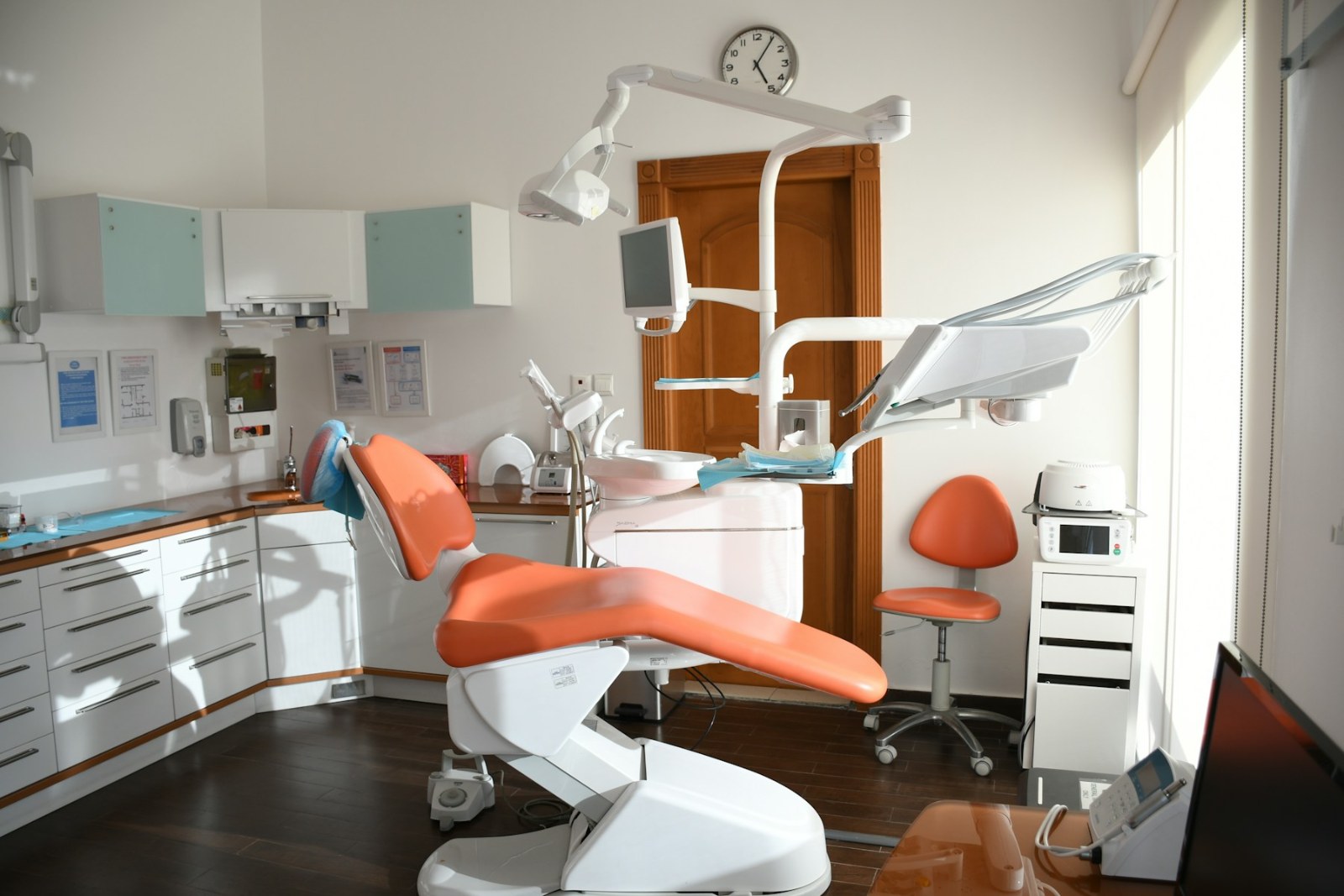
Private practice
Usually a place where one dentist works. People who want long-term follow-up with the same dentist may prefer it.
Polyclinic
A private healthcare facility where dentists from different specialties work together.
Public dental hospital
At institutions such as the Oral and Dental Health Hospital, appointments are usually booked through MHRS, Turkey’s central appointment system.
Oral and dental health polyclinic
A private healthcare facility where more than one dentist, often from different specialties, provides care in the same place.
Are X-rays and CT scans taken in the clinic?
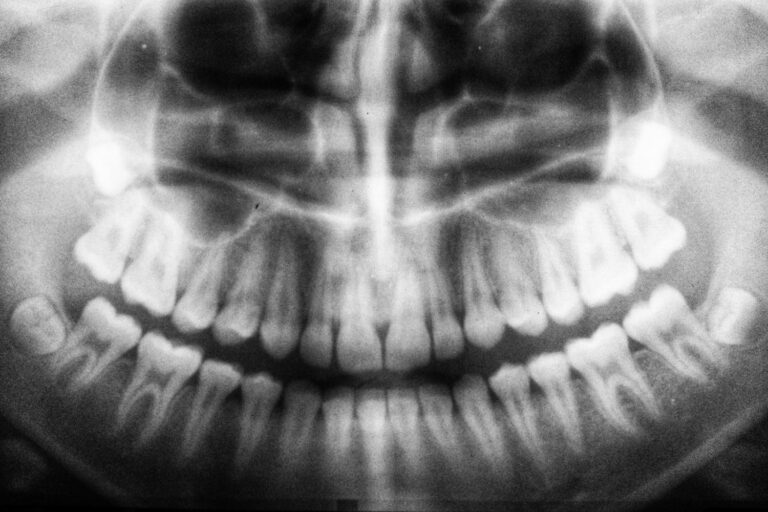
The right treatment starts with a good diagnosis. A visual examination doesn’t show infection at the root tip or the height of the bone. So asking what imaging the clinic has also saves you from going back and forth to another centre.
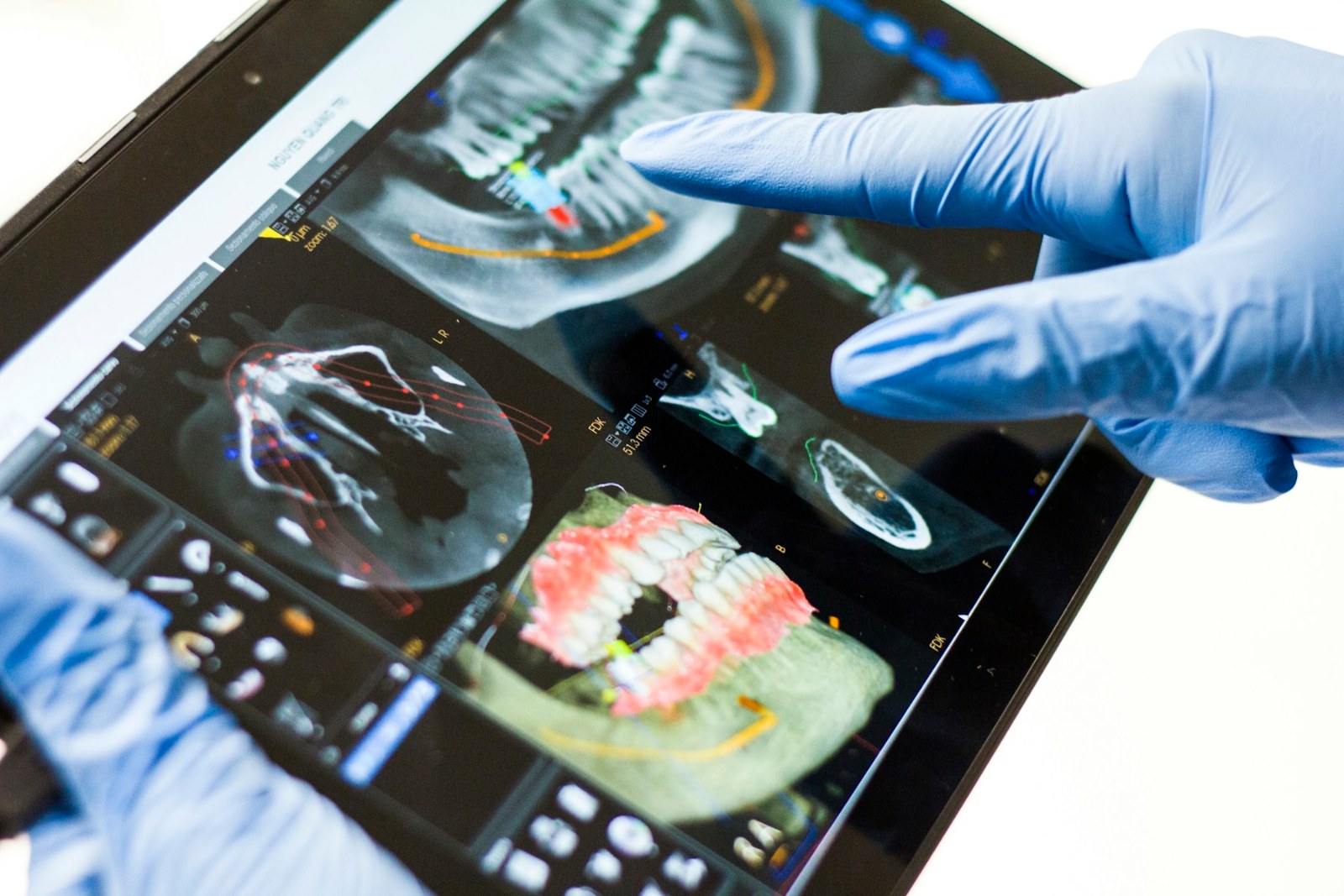
| What does it show? | When is it used? | |
|---|---|---|
| Panoramic X-ray | All the teeth and jaws in one image | First examination and general assessment |
| Cephalometric X-ray | The relationship between the skull and jaws | Orthodontic planning |
| CT scan (CBCT) | Bone and teeth in three dimensions | Implants, impacted teeth, cysts and complex root canal treatment |
| Intraoral scanner | Digital impression of the teeth | Crowns, bridges and clear aligners |
CBCT (dental CT)
An imaging method that shows the teeth, jawbones and surrounding structures as three-dimensional slices.
Why does a written treatment plan matter?
Many treatments take more than one session and are done in a certain order. Getting a written plan after the examination that shows what will be done to each tooth, the options and the order lets you make your decision without rushing. You can also ask for the cost information in writing with this plan.
- 1Examination and imagingfirst appointment
An oral examination is done and X-rays or a CT scan are taken if needed.
- 2Specialist opinion if neededsame day or next appointment
If the treatment involves more than one specialty, the relevant dentists also assess it.
- 3Written planat the end of the examination
The procedures, options and order are given in writing.
- 4Decisionup to you
After reviewing the plan and asking your questions, you decide whether to start treatment.
At the end of a good first examination, you should know what will be done, why and in what order.
What should you expect from the dentist at the first examination?
At the first examination, the dentist is expected to listen to your concern, assess your whole mouth and explain the findings in plain language. If at the end you don’t know what will be done and why, don’t hesitate to ask.
This is also the most useful thing to look for in recommendations: whether the dentist shows the diagnosis on the X-ray, explains the options and leaves the decision to you.
Listening
You are asked about your concern, your general health and the medicines you take.
Imaging
If needed, X-rays or a CT scan are taken and explained to you while you look at them.
Looking at the whole picture
Not just the painful tooth, but the gums and other teeth are checked too.
Options
If there is more than one treatment route, the pros and cons are explained.
Can you get information about the materials used?
Yes. For treatments such as implants, crowns and fillings, it is your right as a patient to ask which material or brand will be used. You can also ask for this information to be added to the written treatment plan.
For example, with implant treatment, knowing the brand makes it easier to find compatible parts if the restoration needs changing later. At our clinic, Straumann, Neodent, Sweden Martina, Nucleoss and Megagen AnyOne implant systems are chosen according to the bone and the treatment plan.
- Which brand and model will be used?
- Is the material’s certificate and serial number recorded?
- How does the process work if maintenance or a part change is needed later?
What can you ask about sterilisation and hygiene?
Hygiene is hard to see from the outside, but you can get an idea with a few simple questions:
- How are instruments sterilised, and is there a separate sterilisation area?
- Are single-use items opened new for each patient?
- Are the chair and surfaces cleaned after every patient?
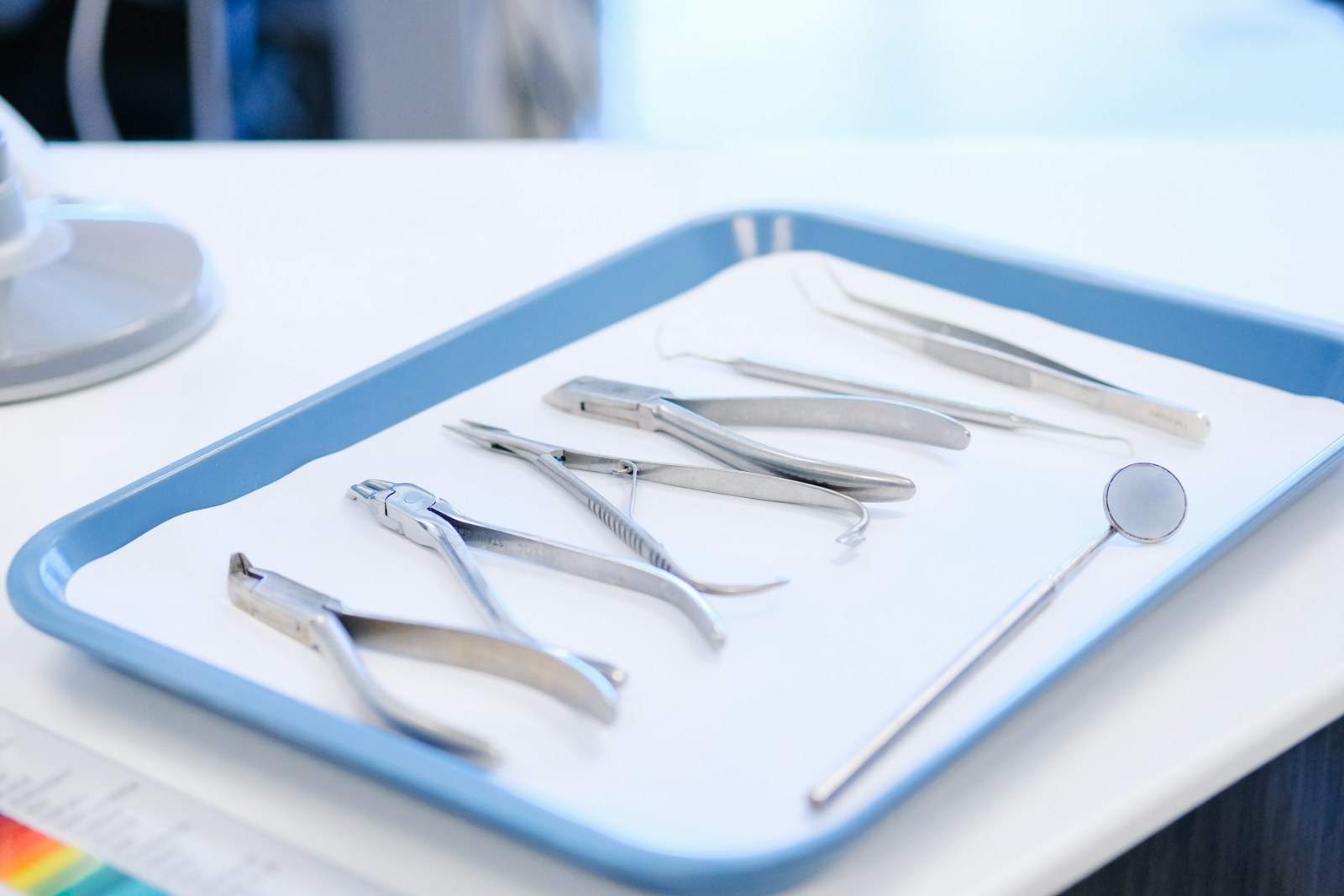
In dental treatment, instruments come into contact with blood and saliva. So a surface looking clean is not enough on its own; what really matters is that instruments are sterilised after every patient.
- 1Washing and packingStage 1
Used instruments are cleaned, dried and placed one by one in sterile pouches.
- 2AutoclaveStage 2
The pouches are sterilised in an autoclave, which works with high-pressure steam.
- 3Storing and openingStage 3
Sterile pouches are stored sealed and opened in front of you at the examination.
Instruments being taken out of sealed sterile pouches in front of you is the most concrete sign of sterilisation you can see.
If you’re afraid of the dentist
Dental anxiety is common and can lead to treatment being put off. If this applies to you, it is important to ask whether the clinic offers sedation or general anaesthesia and who gives it. For details, see our dental treatment under sedation page.
| Sedation | General anesthesia | |
|---|---|---|
| Consciousness | Drowsy but can be woken | Fully asleep |
| Who is it considered for? | Anxious adults, long procedures | Children who can’t cooperate, extensive treatment |
| Who gives it? | Anesthesiologist | Anesthesiologist |
Sedation and general anaesthesia should be given by an anaesthetist after a pre-assessment. Always ask who does this at the clinic.
Getting there, opening hours and emergencies
Treatment often takes several appointments, so it matters that the clinic fits into your daily life.
Opening hours
Are there days that fit your work or school hours? Are Saturday appointments available?
Parking and access
Ask whether there is parking and a wheelchair-accessible entrance.
Emergencies
Find out from the start how to reach the clinic if you have pain outside working hours.
Insurance
If you have private health insurance, confirm whether the clinic has an agreement with your insurer.
MC Multi Clinic is at Şair Ömer Bulvarı No:1, Girne Mahallesi, Efeler. It is open weekdays 10:00–19:00 and Saturday 10:00–18:00; there is free parking and wheelchair access. X-rays and CT scans are taken in the clinic.
Private health insurance
If your private health insurance has dental cover, part of the examination and treatment may be covered by your policy. Because cover and limits vary from policy to policy, it is best to ask your insurer or the clinic’s reception before starting treatment. MC Multi Clinic has an agreement with Allianz.
Let’s talk through your questions at the examination
After the examination and imaging, we’ll give you a written treatment plan; take your time deciding.
Frequently asked questions
How long does the first examination take?
It depends on your concern and whether imaging is needed. Including X-rays and discussing the treatment plan, it usually takes about half an hour.
Does my child need a paediatric dentist?
It isn’t essential, but a paediatric dentist who specialises in treating children can make treatment easier, especially for young or anxious children.
How much should I trust online reviews?
Reviews give a general idea. It is better to decide together with concrete information such as the specialist team, the imaging available and a written treatment plan.
Is a CT scan needed for every treatment?
No. It isn’t usually needed for simple fillings and cleaning. For implants, impacted teeth, cysts and complex root canal treatment, it is taken if the dentist considers it necessary.
Are there dental clinics open at the weekend?
Some clinics are open on Saturdays. It is a good idea to confirm the opening days by phone before booking.
How can I tell how hygienic a dental clinic is during the examination?
You can check that the dentist puts on fresh gloves and a mask for you, that the chair has been cleaned and that instruments are taken out of sealed sterile pouches in front of you. It is also perfectly normal to ask how sterilisation is done.
Do I need to go to different clinics for implants and braces?
At a polyclinic where dentists from different specialties work together, these treatments can be planned in the same place. The dentists make the plan together and you don’t need to go back and forth between different places.
How many appointments are needed for the examination and treatment plan?
Usually the examination, imaging and plan are discussed at the first appointment. When more than one specialty is involved, a second assessment appointment may be needed.
This article is for general information and does not replace an examination.