In this article
If you haven’t seen a dentist for a long time, not knowing what will happen at the first appointment can make it harder to go. In brief: at the first examination your concern is heard, your mouth is examined and X-rays are taken if needed, and then the treatment options and their order of priority are explained to you. Unless it is an emergency, treatment usually doesn’t start at the first appointment; the picture is made clear first.
- You can book by phone, on WhatsApp or with the appointment form.
- Bringing a list of your medicines and any old X-rays makes the assessment easier.
- X-rays and CT scans are taken in the clinic; you don’t need to go to a separate centre.
- After the examination you are given a written treatment plan; you are not rushed into a decision.
The first examination step by step
- 1Appointmentbeforehand
Mentioning your pain or the treatment you’re interested in when booking helps us match you with the right dentist.
- 2Medical historyfirst minutes
Your concern, the medicines you take and any chronic conditions are discussed.
- 3Examination of the mouthsame session
The teeth, fillings, gums, jaw joint and tissues in the mouth are examined.
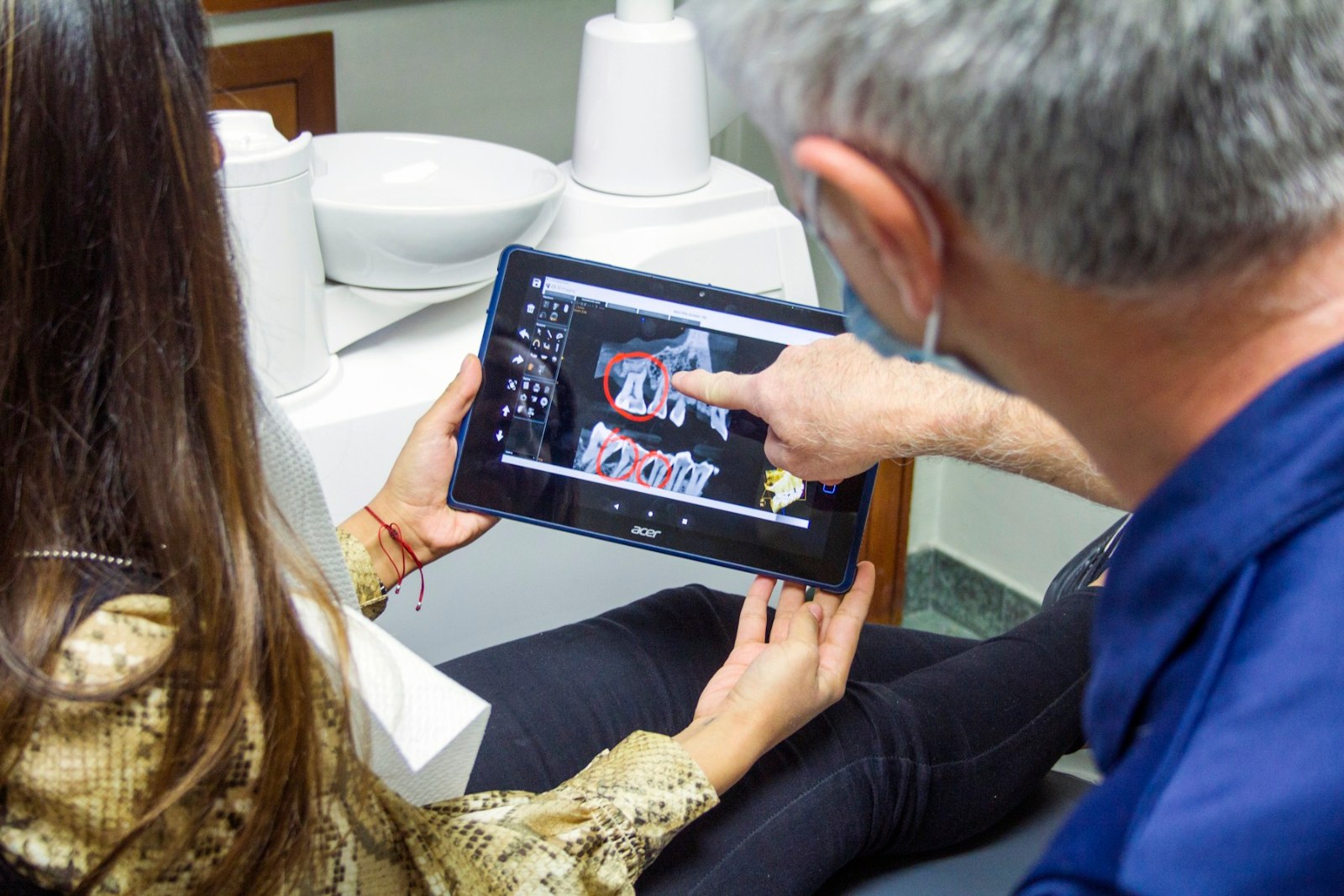
- 4X-raysif needed
A panoramic X-ray is taken; a 3D CT scan is taken for things like implants or impacted teeth.
- 5Treatment plansame session
What each tooth needs, the options and the order of priority are explained; a written plan is given.
How often should you have a dental check-up?
Even without any problems, a check-up once or twice a year is recommended for most people. Your dentist sets the frequency based on your risk of decay, your gums and your past treatment.
Regular check-ups help catch problems early that could later lead to pain or longer treatment. Plaque and tartar building up where the brush can’t reach are found at these check-ups, and the condition of existing fillings and crowns is assessed.
- 1Routine check-up1-2 times a year
Your oral and dental health is assessed even if you have no complaints.
- 2Early diagnosisBefore the problem grows
Early decay and gum problems are noticed.
- 3Preventive carePrevention
A scale and polish and, if needed, preventive treatments reduce the need for more extensive treatment later.
What is a panoramic X-ray and which X-rays are taken at the first examination?
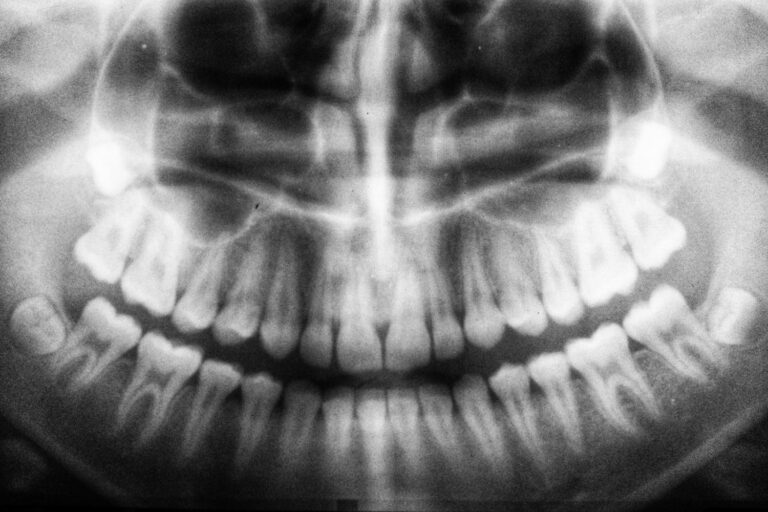
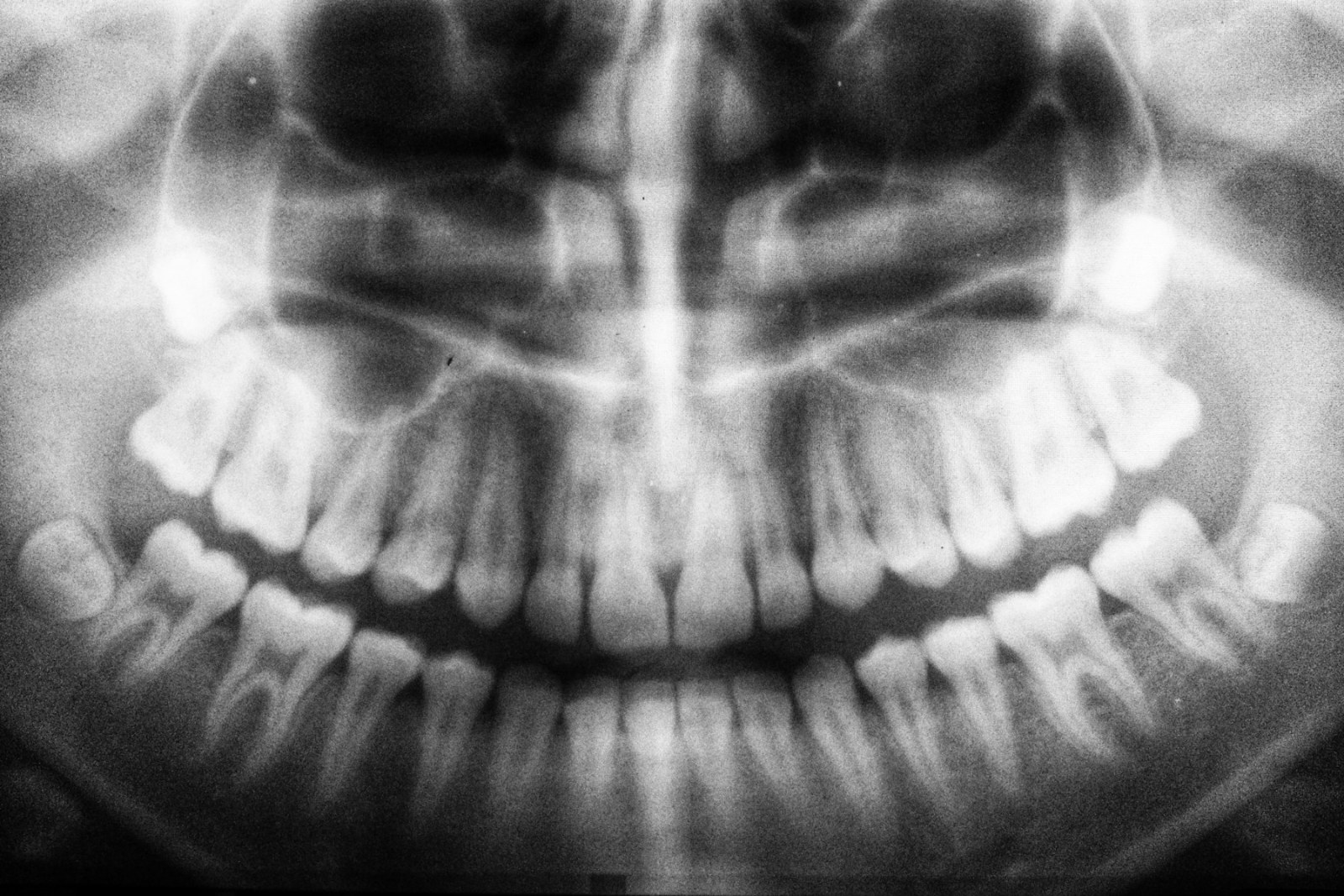
At the first examination, a panoramic X-ray is usually taken to look at decay you can’t see, the root tips and the jawbone. A panoramic X-ray is a two-dimensional image that shows the upper and lower jaws, all the teeth and the surrounding tissues in one picture.
In some cases a two-dimensional image isn’t enough. When planning implants, examining an impacted wisdom tooth or complex root canals, the 3D CT scanner in our clinic is used. The dentist decides which imaging is needed based on the examination findings.
Panoramic X-ray
Shows the general condition of all the teeth and the jawbone in one image.
3D CT scan
Shows bone thickness and the relationship of the teeth to the nerve canal in three dimensions.
Periapical X-ray
Used to see the root tip of one or a few teeth in more detail.
Are dental X-rays harmful?
The radiation dose in dental X-rays is low, and when an X-ray is needed, the diagnostic benefit is far greater than this small risk.
We all receive natural radiation every day from the sun, the ground and our surroundings. The dose of a panoramic dental X-ray is close to a few days of natural radiation. Digital X-ray systems have greatly reduced the dose compared with older machines. If there is any chance you are pregnant, always tell the dentist before the X-ray.
- Low-dose radiation
- Short exposure time with digital systems
- Reveals problems you can’t see
- Comes from the sun, the ground and the environment
- We are exposed to it every day
- A panoramic X-ray is close to a few days of natural dose
Useful things to bring
List of medicines
Medicines you take regularly, especially blood thinners.
Old X-rays
Any dental X-rays taken in the last year.
Health information
Information on heart disease, diabetes, allergies and pregnancy.
Your questions
If you write down your questions, you won’t forget any of them.
If you’re in pain, mention it when booking. When there is pain, relieving it comes first.
Why should you tell us about your health conditions and medicines?
Your general health conditions and the medicines you take regularly directly affect how dental treatment is planned.
For example, for a patient taking blood thinners, the prescribing doctor’s opinion may be needed before an extraction or surgery. Diabetes can affect healing; blood pressure and heart disease matter when choosing the local anaesthetic. Some medicines for bone loss can change how the jawbone heals after procedures.
General health conditions
Blood pressure, heart disease and diabetes can affect the treatment plan.
Regular medicines
Blood thinners and some bone-loss medicines may need precautions before surgery.
Allergies
Always mention allergies to antibiotics, local anaesthetics or latex.
Fill in your conditions, allergies, regular medicines and supplements fully on the examination form.
Referral to a specialist
At our clinic, dentists working in orthodontics, endodontics, periodontics, paediatric dentistry and prosthodontics, along with an anaesthetist, are under one roof. If something that needs a specialist’s opinion is found at the examination, planning is done together with the relevant dentist. You can meet the team on our dentists page.
| Concern or need | Relevant specialty |
|---|---|
| Crowded teeth, clear aligners | Orthodontics |
| Toothache, root canal treatment, retreatment | Endodontics |
| Bleeding gums, implant surgery | Periodontics |
| Children’s dental treatment | Pedodontics |
| Crowns, bridges, dentures, smile design | Prosthodontics |
| Sedation, general anaesthesia | Anaesthesia |
If you’re afraid of the dentist
Just mention your fear when booking or at the examination. Procedures are explained beforehand and you can take a break whenever you want. When needed, sedation or general anaesthesia with an anaesthetist can also be considered.
Getting to the clinic
Address
Girne Mah., Şair Ömer Bulvarı No:1, Efeler / Aydın
Opening hours
Weekdays 10:00–19:00, Saturday 10:00–18:00. Closed on Sundays.
Parking and access
Free parking and wheelchair-accessible entrance.
Contact
Phone +90 256 212 46 46, WhatsApp +90 532 295 48 68.
Has it been a year since your last dental check-up?
Let’s plan your appointment; if you have a concern, just mention it when booking.
You may also want to read: What to look for when choosing a dental clinic in Aydın.
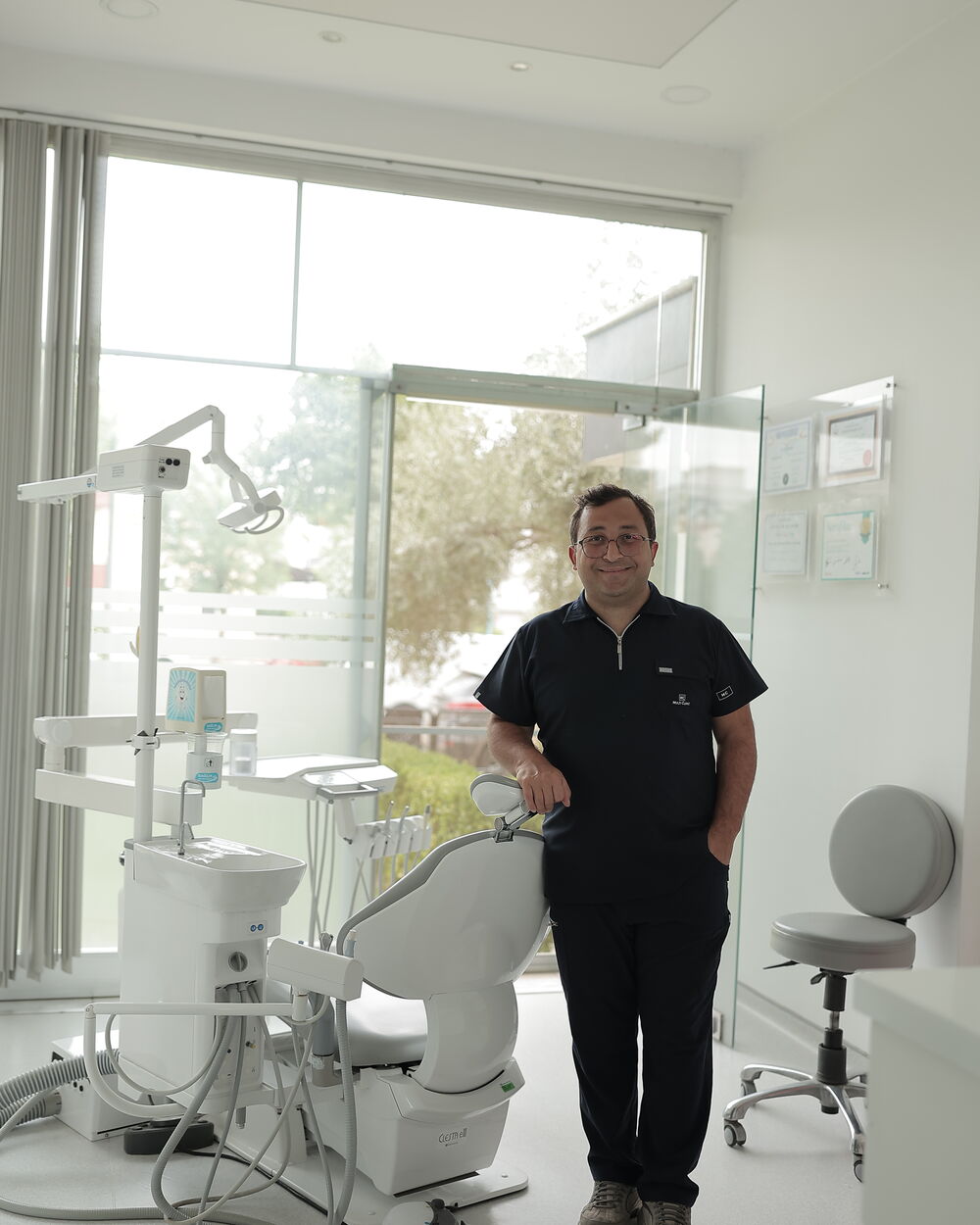
Carries out check-ups, fillings, scale and polish and general dental treatment at our clinic; when a specialty is needed, planning is done together with the relevant dentist.
Frequently asked questions
How often should I have a dental check-up?
In general, at least once a year is recommended. For things like gum disease, frequent decay or braces, your dentist may recommend more frequent check-ups.
Does treatment start at the first examination?
Unless it is an emergency, an examination and planning usually come first. Procedures such as simple fillings and scale and polish can be done the same day if suitable.
Are X-rays taken at every examination?
No. They are taken when the dentist considers them necessary, to see decay and root problems that can’t be seen by eye.
Can I choose which dentist I see?
Yes. Just give the name of the dentist you’d like to see when booking.
Are you open on Saturdays?
Yes, we are open on Saturdays from 10:00 to 18:00. The clinic is closed on Sundays.
Does your clinic have agreements with private health insurers?
Our clinic has an agreement with Allianz. We can check together at reception which treatments your policy covers and what your limits are.
Is a 3D CT scan taken at every examination?
No. A CT scan is taken only when the dentist decides a detailed examination is needed, such as for implant planning, impacted teeth or complex root canal treatment.
Is a scale and polish done at the first examination?
The first examination is mainly for assessing the situation and planning treatment. If the dentist’s schedule allows, a scale and polish can be done at the same appointment.
This article is for general information and does not replace an examination.