In this article
The most important thing to know before starting orthodontic treatment is that the treatment should be planned by a dentist with specialist training in orthodontics, and that the decision should be based on records such as X-rays, photos and impressions. Orthodontics is not just about straightening teeth; it also concerns how the upper and lower jaws fit together, chewing and the jaw joint.
Because treatment often lasts months and needs regular check-ups, choosing a clinic in Aydın or Efeler that is easy for you to get to also makes things easier.
- An orthodontist is a dentist who has completed specialist training in orthodontics after dental school.
- For children, the first orthodontic check-up is recommended around age 7.
- The plan is made with a cephalometric X-ray, photos and impressions or an intraoral scan.
- If the gums and bone are healthy, orthodontic treatment can be planned at any age.
Who is an orthodontist and what do they look at?
Orthodontist
A dentist who has completed specialist or doctoral training in orthodontics after dental school. They treat problems with the position of the teeth and jaws.
Although people often think of them as “the doctor who fits braces”, an orthodontist looks not only at how the teeth line up but also at the position of the jaws relative to each other and the direction of growth.
Crowded teeth
Teeth overlapping or coming in turned because there isn’t enough room in the jaw.
Gaps between teeth
Spaces left between the teeth.
Bite problems
Upper and lower teeth not meeting properly; overbite, underbite, deep bite or open bite.
Jaw development
In growing children, a narrow upper jaw or a jaw that sits too far forward or back.
Are extractions always needed in orthodontic treatment?
No, not every orthodontic treatment involves extractions. Extraction is usually considered for severe crowding where the teeth don’t fit in the jaw, or when the teeth are pushed noticeably forward.
The decision is made after measuring the width of the jaw, the lip profile and how the upper and lower teeth meet. A cephalometric X-ray, a panoramic X-ray and an intraoral scan or impressions are used for this. If teeth are extracted, the plan is to close the spaces by moving the teeth during treatment.
- There is enough room in the jaw for the teeth to line up, or room can be made with small expansions
- The lip profile is suitable for treatment
- More common for mild and moderate crowding
- Teeth overlap because the jaw is narrow
- Extra room is needed for the lips to close comfortably
- Usually premolars are extracted symmetrically
The condition of impacted wisdom teeth is also assessed at the examination. Whether they need to be removed varies from person to person and is the dentist’s decision.
At what age are braces fitted? A child’s first check-up
There is no single age; the timing depends on whether the problem comes from the teeth or the jawbone. Even if there is no obvious problem, it is recommended that children have an orthodontic check-up once around age 7. At this stage the front permanent teeth start coming through and the direction of jaw growth can be assessed.
- 1First assessment7–8 years
The order teeth are coming through, crossbite or a narrow jaw are checked.
- 2Early treatment8–10 years if needed
Treatment can be done with removable appliances, for example to widen the jaw or break a habit.
- 3Fixed treatmentusually from 11–13 years
Once the permanent teeth are through, braces or, in suitable cases, clear aligners are planned.
A baby tooth being extracted early or left untreated can cause the permanent tooth coming underneath to lose its space. A space maintainer is used if needed.
What is done at the first examination?
An orthodontic plan isn’t made just by looking in the mouth; it is based on measurements and records. At the first examination and the records appointment, the following are usually done:
| Record | What for? |
|---|---|
| Panoramic X-ray | All the teeth, roots and teeth that haven’t come through |
| Cephalometric X-ray | The position of the jaws relative to each other and the face |
| Facial and intraoral photos | The smile, profile and condition of the teeth |
| Impressions or intraoral scan | A digital or plaster model of the teeth |
| CT scan (CBCT) | If needed, for things like an impacted canine |
At MC Multi Clinic, panoramic and cephalometric X-rays, CT scans and intraoral scans are done in the clinic; you don’t need to go to a separate centre for records.
Orthodontics for adults and treatment options
There is no age limit for orthodontics. If the gums and the bone supporting the teeth are healthy, teeth can be moved in adults too. In adults, gum health is checked before treatment.

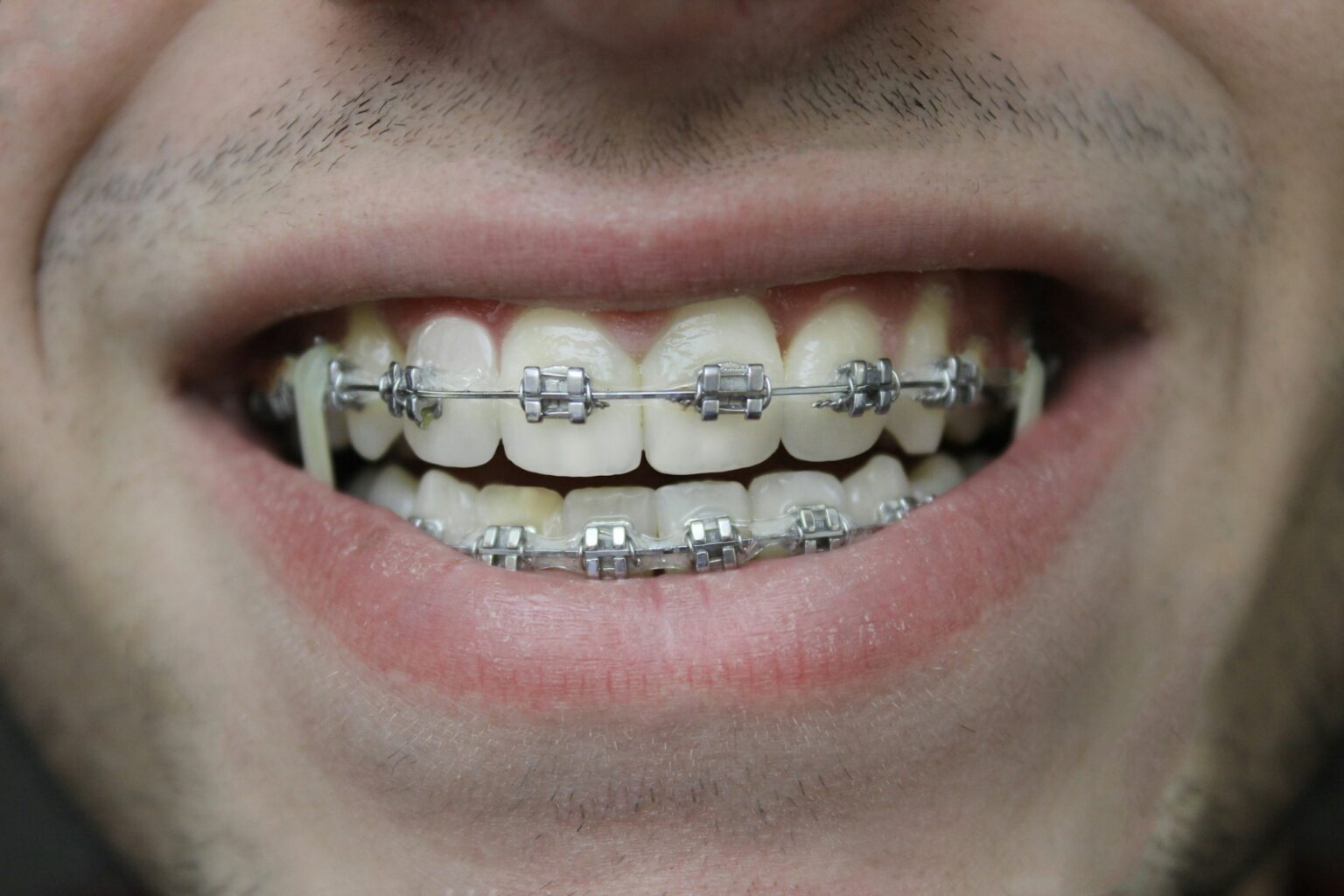
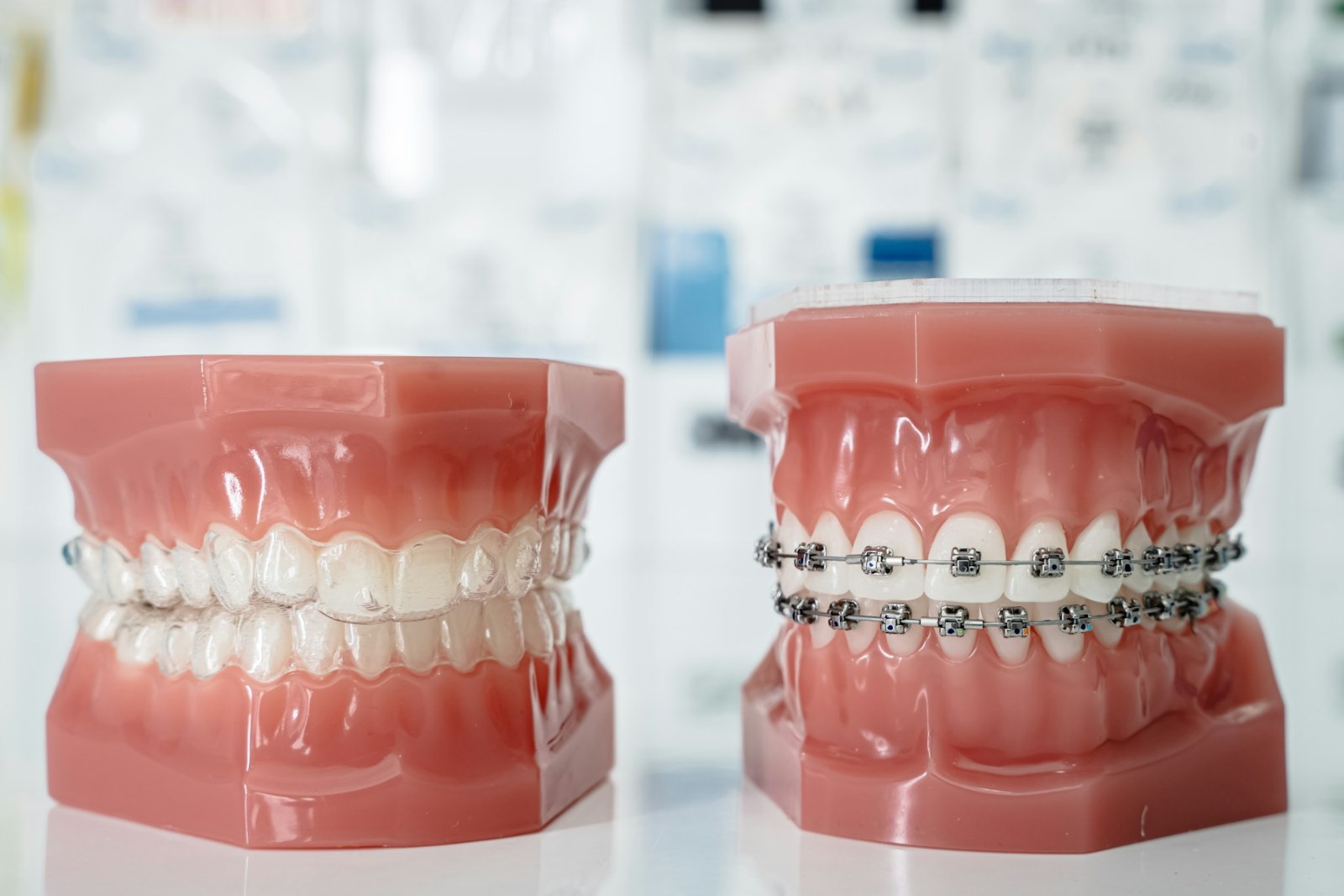
| Metal braces | Ceramic braces | Clear aligners | |
|---|---|---|---|
| Appearance | Noticeable | Less noticeable | Usually not noticeable |
| Taking out | Fixed | Fixed | Taken out for eating and brushing |
| What’s expected of the patient | Coming to check-ups, care with eating | Coming to check-ups, care with eating | Wearing them 20–22 hours a day |
| When is it considered? | In most cases | For people who care about appearance | In cases the dentist finds suitable |
What should you eat after braces are fitted?
With braces, you need to avoid hard, sticky and crunchy foods, and cut food into small pieces to chew with your back teeth rather than biting with your front teeth. These simple changes help prevent brackets coming off and treatment being held up.
People with clear aligners take them out to eat, so they aren’t as restricted; but they need to brush their teeth before putting the aligners back in.
Hard foods
Hard fruit and vegetables such as apples and carrots should be sliced and chewed with the back teeth.
Foods with stones and shells
Remove the stones from foods such as olives and cherries first; be careful with nuts.
Sticky and sugary foods
Avoid foods that stick to brackets, such as chewing gum, Turkish delight and caramel.
How long does treatment take and what happens afterwards?
It depends on how severe the problem is, age, the method chosen and commitment to treatment. Most treatments take 12–24 months. With braces, check-ups are usually every 4–6 weeks.
Retention
The period after treatment when the teeth are kept in place with a thin wire bonded behind the front teeth or a clear retainer worn at night.
After treatment, teeth tend to move back to their old position; retention is part of the treatment.
How do you brush your teeth with braces?
With braces, teeth should be brushed after every meal and at least twice a day; the areas around the brackets and under the wires should also be cleaned with an interdental brush. Brackets and wires create an ideal place for food debris and plaque to build up.
If cleaning isn’t good enough, the gums can swell and bleed, decay can start around the brackets and white spots can remain on the tooth surface after the braces come off. That is why oral care is as important as the treatment itself.
Interdental brush
A small brush with a thin tip used to clean areas the normal brush can’t reach, such as between brackets and under the wire.
- 1General brushingStep 1
With a soft-bristled or orthodontic brush, all tooth surfaces and the upper and lower edges of the brackets are brushed with circular movements.
- 2In-between areasStep 2
The interdental brush is passed under the wire to clean the sides of the brackets.
- 3Supporting careStep 3
If your dentist recommends it, a fluoride mouthwash and orthodontic floss are used.
Questions you can ask the dentist at the first examination
- Which dentist will plan and follow my treatment?
- Which method suits my case, and why?
- What is the estimated time and how often are check-ups?
- Will any teeth need to be extracted during treatment?
- How will retention be done after treatment, and for how long?
- How is the cost decided, and can I have a written plan?
What should you do if a bracket comes off or a wire digs in?
You can protect your cheek by putting orthodontic wax over the wire that’s digging in or the loose bracket, then ask the clinic for a check-up appointment. Small problems like this are common in orthodontic treatment and are usually fixed at a short appointment.
A loose bracket usually stays hanging on the wire. But because no force is passed to that tooth, it stops moving; so letting your dentist know without waiting for the next appointment is important to keep treatment on track.
| Condition | First thing to do at home | What’s done at the clinic |
|---|---|---|
| Wire digging into the cheek or lip | Orthodontic wax is pressed over the end of the wire. | The long end of the wire is cut or bent. |
| Bracket coming off | If the piece moves, cover it with wax; if it has come out, keep it. | The bracket is cleaned and bonded again. |
| Elastics falling off | Usually not urgent. | The elastics are replaced at the next appointment. |
Book an orthodontic examination
Let us take your records and explain the options that suit you, along with estimated times.

The clinic’s founding dentist; plans and follows up orthodontics, braces and clear aligner treatment.
Frequently asked questions
What does orthodontics mean?
The dental specialty that diagnoses and treats problems with the position of the teeth and jaws.
Can adults have braces?
Yes. If the gums and the bone supporting the teeth are healthy, orthodontic treatment can be planned at any age.
Is orthodontic treatment painful?
Having brackets fitted doesn’t hurt. There may be pressure and tenderness for a few days after adjustments or aligner changes.
Clear aligners or braces?
They suit different situations. For some complex bite problems, braces are more suitable. The decision is made after the examination and records.
When should you have an orthodontic examination?
For children, around age 7; for adults, when you notice crowding, a bite problem or a jaw joint complaint.
Do clear aligners affect speech?
In the first days some sounds may be slightly different. The tongue usually gets used to the aligner within a few days and speech returns to normal.
Is there an age limit for orthodontic treatment?
There is no upper age limit. Adults whose gums and the bone supporting the teeth are healthy can also have orthodontic treatment; gum health is assessed before treatment.
How do you use orthodontic wax?
Break off a small piece, soften it between your fingers and press it gently over the dried bracket or the wire that’s digging in. It is best to take it out before eating.
This article is for general information and does not replace an examination.