In this article
The cost of braces depends on how severe the problem is, how long treatment will take, whether one or both jaws are treated and the method chosen (metal braces, ceramic braces or clear aligners). Extra appliances, extractions if needed and retention after treatment are also part of the plan.
Because orthodontic treatment is planned according to each patient’s jaw structure, an accurate cost can’t be given without an examination and records. In this article we explain what to look at when comparing.
- Treatment time and the number of check-ups directly affect the cost.
- Metal braces, ceramic braces and clear aligners need different materials and work processes.
- Ask whether records, extra appliances and retention are included in the plan.
- In children, early assessment can reduce the need for more extensive treatment later.
Why can’t a price be given without an examination?
Crowding that looks simple from the outside may be due to a different root position in the bone or a problem with how the jaws relate. The orthodontist sets the time and method after assessing the case with a cephalometric X-ray, photos and impressions or an intraoral scan.
Does insurance cover braces?
Orthodontic treatment at private clinics is not covered by SGK, the Turkish state social security scheme. If you have private health insurance, whether it is covered depends on the dental and orthodontic cover in your policy.
Because orthodontics is a long treatment, some policies may cover only part of it or up to a certain limit. Our clinic has an agreement with Allianz; if you have a policy, the cover is checked together at registration.
Before starting treatment, ask your insurer whether orthodontics is clearly included in your policy and whether there is an age limit.
Factors that determine the cost
| Factor | Why does it make a difference? |
|---|---|
| Severity of the problem and time | The longer the treatment, the more check-ups and materials are used. |
| One or both jaws | Most treatment is done on both jaws together; if one jaw is enough, the plan changes. |
| Method | Metal braces, ceramic braces and clear aligners need different materials and laboratory processes. |
| Extra appliances | Jaw expansion or functional appliances may be needed. |
| Extractions and preliminary treatment | Extractions to make room, or treatment of decay and gums first, may be needed. |
| Records | X-rays, photos and digital impressions. |
| Retention | A fixed wire or night retainer after treatment. |
Can braces be fitted only to the lower or upper teeth?
It is possible in some limited cases, but usually it isn’t enough. The aim of orthodontics is not only to straighten teeth but to make the upper and lower teeth meet correctly.
When only the upper teeth are straightened, their alignment changes; if this new alignment doesn’t match the lower teeth, chewing and bite problems can appear. The dentist decides whether one jaw can be treated after a bite analysis.
Treating one jaw without considering the bite can disturb the contact between upper and lower teeth and lead to jaw joint problems later.
What changes with each method?
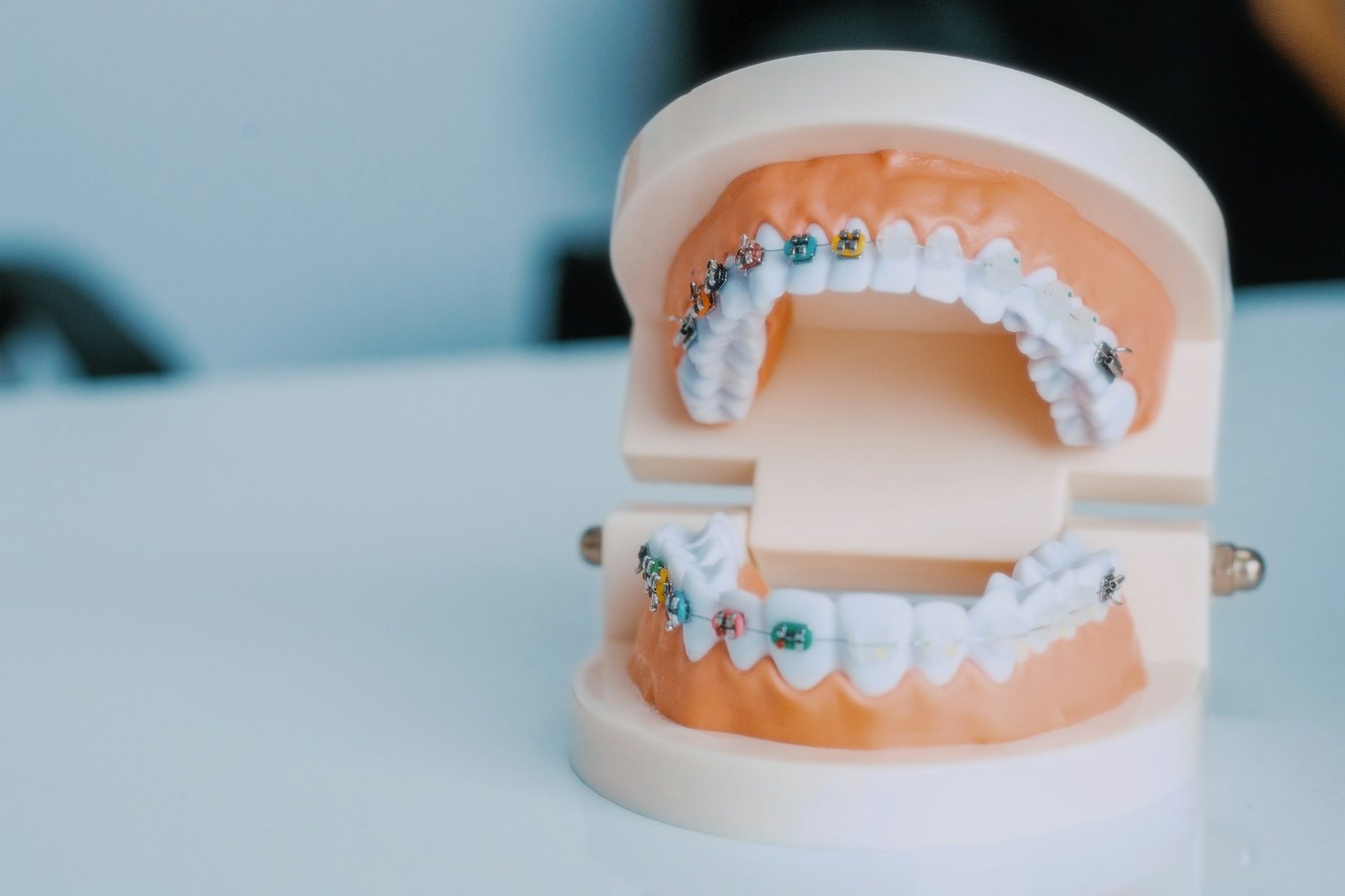
| Metal braces | Ceramic braces | Clear aligners | |
|---|---|---|---|
| Appearance | Noticeable | Less noticeable | Usually not noticeable |
| Material | Metal brackets and wires | Tooth-coloured ceramic brackets | A custom-made series of aligners |
| Follow-up | Wire adjustment every 4–6 weeks | Wire adjustment every 4–6 weeks | Aligner changes and check-ups |
| What’s expected of the patient | Care with eating | Care with eating, limiting coloured drinks | Wearing them 20–22 hours a day |
How does the complexity of the case affect treatment?
The severity of the bite problem changes the length of treatment, the appliances used and the number of appointments, so it directly affects the cost too. Planning for mild crowding is very different from planning for jaws that sit too far forward or back relative to each other.
A cephalometric X-ray taken at the first examination shows whether the problem comes only from the teeth or from the jaw structure. The treatment plan is prepared based on this analysis.
Mild crowding
Cases where a few teeth are turned or overlapping without a bite problem. Usually shorter.
Jaw-related problems
Cases where the lower or upper jaw sits noticeably forward or back. Extra appliances or elastics may be needed.
Impacted teeth
Surgically exposing teeth such as an impacted canine and gradually bringing them into place can take a long time.
The effect of early assessment in children
If a narrow upper jaw or crossbite is noticed at the first orthodontic check-up around age 7–8, short treatments with removable appliances can be done, making use of the growth period. In some children, this can reduce the need for longer and more extensive treatment later.
What happens if a clear aligner is lost?
If one of the aligners in the series is lost or broken, a new one may need to be made, and this can add to the cost. So it is helpful to ask in advance what the written plan says about loss or breakage.
When the aligners are out of your mouth, always keep them in their case; don’t wrap them in a napkin or carry them in your pocket. If one is lost, the following steps keep treatment on track:
- 1Tell your dentistStraight away
Let the clinic know without delay so your teeth aren’t left without an aligner for long.
- 2Temporary solutionAs your dentist advises
Depending on the situation, the previous aligner is worn temporarily or you move on to the next one.
- 3New alignerIf needed
If you can’t move on to the next aligner, a new one is made based on the current position of the teeth.
Clarify the scope: what should the written plan include?
When comparing two plans, look not only at the total figure but at what is included:
- 1Initial recordsincluded in the plan?
X-rays, photos and digital impressions.
- 2Check-upsthroughout treatment
Estimated number of check-ups and how often.
- 3Additional proceduresif needed
Appliances, extractions or preliminary treatment.
- 4Retentionat the end of treatment
A fixed wire or night retainer and check-ups afterwards.

Two plans with different scopes are not the same treatment.
At MC Multi Clinic, after the examination you are given a written treatment plan showing the procedures stage by stage. If you have private health insurance (the clinic’s contracted insurer is Allianz), it is also a good idea to ask your insurer whether your policy covers orthodontics.
Are retainers included in the plan?
Treatment doesn’t end on the day the braces come off. A retention period begins to stop the teeth moving back to their old position; it should be clear from the start whether the appliances used in this period are included in the plan.
It takes time for the bone and tissues around the teeth to adapt to the new position. Without a retainer, the teeth can shift again.
| Appliance | What is it? | How is it used? |
|---|---|---|
| Fixed retainer wire | A thin wire bonded to the inner surface of the front teeth, not visible from outside | It is bonded when the braces come off and stays in the mouth for as long as the dentist recommends. |
| Clear retainer | A removable retainer made to fit the final position of the teeth | Usually worn all day at first, then at night for as long as the dentist decides. |
Ask whether retainers are included in the written plan and how they are replaced if lost or broken.
Let’s work out your orthodontic plan together
After your records, we’ll give you the suitable method, estimated time and scope in writing.

Plans and follows up orthodontics, braces and clear aligner treatment at our clinic.
Frequently asked questions
Why is there a cost difference between clear aligners and braces?
Clear aligners are produced as a custom series; with braces, the materials and check-ups are different. Which one suits you is decided according to the case.
Can I spread the payment over the treatment period?
Payment options vary by clinic. You can ask about payment options along with the written plan.
If extractions are needed, are they planned separately?
An extraction is a separate procedure and, if needed, it is stated in the treatment plan. Ask whether it is included in your plan.
What happens if a bracket comes off?
Hard and sticky foods can cause a bracket to come off. A loose bracket is bonded again at the next check-up or earlier if needed; in that case, call the clinic.
How long does treatment take?
Most orthodontic treatment takes 12–24 months. An estimated time is given after the examination and records.
Does orthodontic treatment change with age?
Age alone isn’t decisive. But in adults, teeth may move a little more slowly, and gum health is assessed more carefully before treatment.
What happens if I miss check-up appointments?
Check-ups are usually every few weeks. If they are missed, the movement of the teeth can’t be followed and treatment may take longer; that is why regular appointments matter.
How long do I need to wear a retainer?
It varies from person to person. To keep the teeth in their new position, long-term use, especially at night, is usually recommended.
This article is for general information and does not replace an examination. The cost is given in writing after the examination and records.