
Our treatments · Periodontics
Gum Disease Treatment in Aydın (Periodontics)
Examination by a periodontist of problems such as bleeding and receding gums and loose teeth, and treatment according to the stage.
- Treatment time1–4 sessions depending on the stage
- During the procedureLocal anesthesia if needed
- First stepGum measurement and X-rays
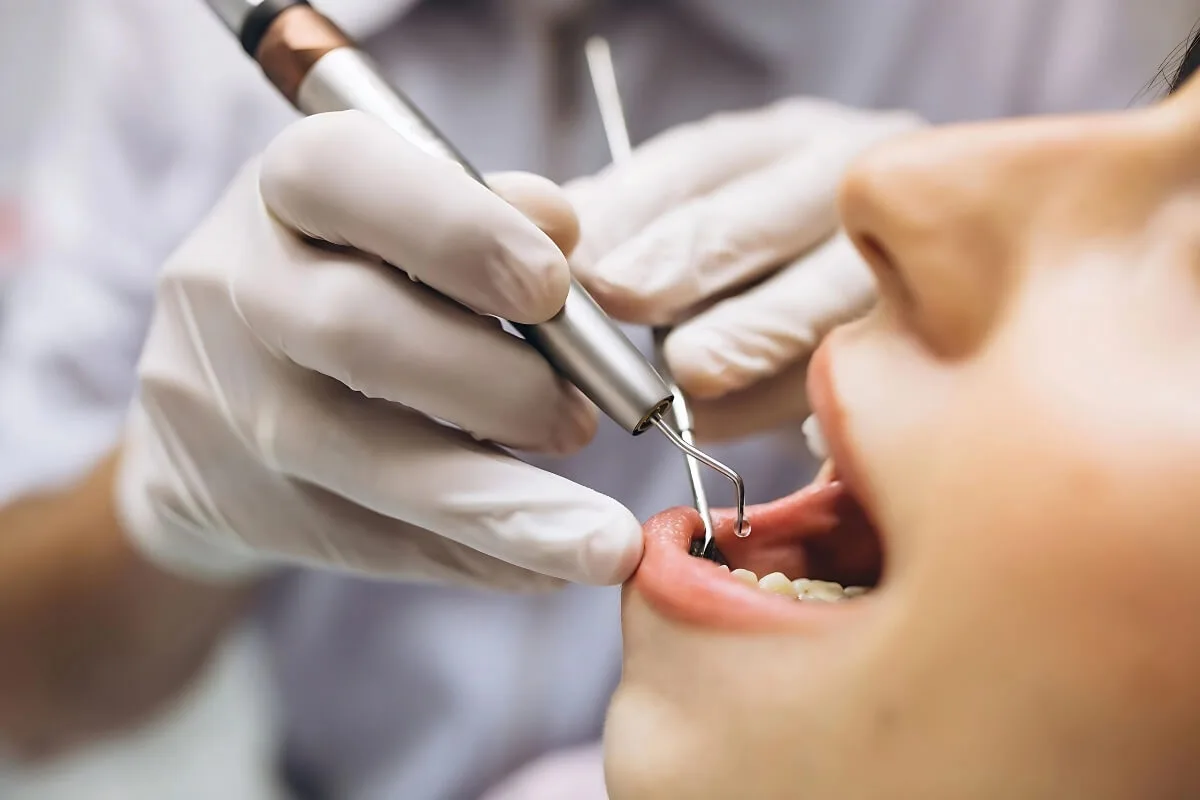
- Periodontiston our team
- X-rays at the clinicpanoramic and CT
- Open on Saturdays10:00–18:00
- Free parkingEfeler, Şair Ömer Boulevard
What’s on this page?
Gum disease in brief
Gum disease starts when bacterial plaque and tartar building up on the teeth cause inflammation in the gums. The early stage is called gingivitis; the advanced stage, which also affects the bone under the gums, is called periodontitis.
Gingivitis can be reversed with proper cleaning and oral care. In periodontitis, however, lost bone does not come back on its own; the aim of treatment is to stop the disease and protect the teeth. Treatment is planned according to the stage determined by gum measurement and X-rays.
What are the symptoms of gum disease?
Gum disease often progresses without pain. That is why it is a good idea to have an examination if you have any of the following symptoms:
Bleeding gumsBleeding when brushing or flossing.
Redness and swellingGums that look dark red and are tender.
Bad breathA bad smell or taste that does not go away despite brushing.
Receding gumsTeeth that look longer, with the root surface exposed.
Loose teethMovement in the teeth or new gaps opening between them.
Gum abscessAn inflamed swelling on the gum, with pain.
The difference between gingivitis and periodontitis
The two are different stages of the same disease. Which one you have is found out at the examination with gum measurement and X-rays.
Gingivitis
- !Area affected: Gums only
- !Symptoms: Bleeding, redness
- ✓Gum pockets: No deep pockets
- ✓X-rays: No bone loss
- ✓Reversibility: Reversed with cleaning and care
Periodontitis
- ✕Area affected: Gums and the bone holding the tooth
- ✕Symptoms: Bleeding, recession, bad breath, looseness
- ✕Gum pockets: Deepened pockets
- ✕X-rays: Bone loss may be seen
- !Reversibility: Can be stopped; lost bone does not come back on its own
Gum measurement is done with a thin measuring instrument that checks the depth of the pocket between the gum and the tooth; it is not painful.
Gum treatment step by step
Examination and measurementDay 1
Scaling1 session
Root surface cleaning (curettage)1–4 sessions if needed
Surgical treatmentif needed
Check-ups and maintenance therapyafter 6–8 weeks, then every 3–6 months
- Examination and measurementDay 1
The gum pockets are measured, a panoramic X-ray is taken and the stage of the disease is determined. Your medication and general health, such as diabetes, are discussed.
- Scaling1 session
Plaque and tartar on the gums are cleaned and the teeth are polished. You are shown the brushing and interdental cleaning method that suits you.
- Root surface cleaning (curettage)1–4 sessions if needed
In deep pockets, tartar and inflamed tissue under the gums are cleaned under local anesthesia and the root surfaces are smoothed.
- Surgical treatmentif needed
In advanced cases where deep pockets remain, flap surgery or gum contouring may be planned.
- Check-ups and maintenance therapyafter 6–8 weeks, then every 3–6 months
Healing is checked with measurements. Regular check-ups and professional cleaning are continued so the disease does not return.
Who is on your treatment team?
Gum treatments are planned and carried out by our periodontist, Dr. Ömer Kazım Toprak.
 MC Multi Clinic team · Efeler, Aydın

Periodontist
Gum examination, curettage, gum surgery and preparation before implants.

Anesthesiologist
Sedation when needed for patients with dental anxiety.
Inside the clinic

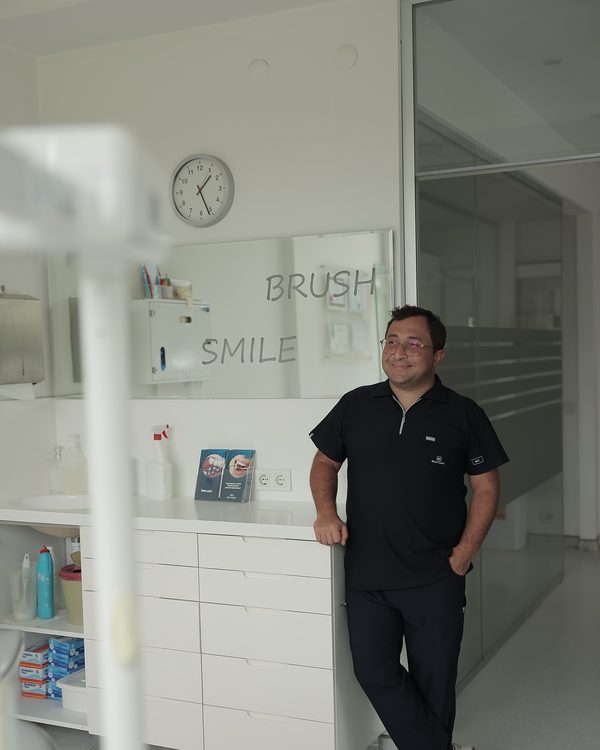

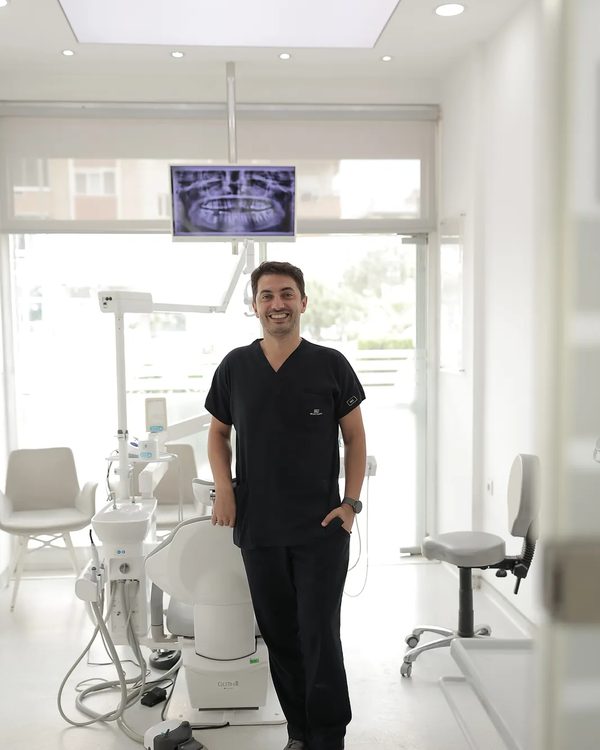
If your gums bleed, let’s start with an examination
- Weekdays 10:00–19:00 · Saturday 10:00–18:00
- Şair Ömer Boulevard No:1, Efeler / Aydın
What affects the cost of gum treatment?
It would not be right to give an exact figure without an examination. After the examination, the scope of the treatment is explained to you in detail. The main factors are:
Stage of the diseaseGingivitis or periodontitis?
Number of areasHow many areas of the jaw are treated
Need for surgeryIs curettage enough, or is surgery needed?
ImagingPanoramic X-ray or CT scan
SedationWhether sedation is needed
Check-up frequencyThe interval for maintenance therapy
Conditions that increase the risk of gum disease
Gum disease is more common and can progress faster in the following situations. It is important to tell your dentist about them at the examination.
SmokingReduces blood flow to the gums, can hide symptoms and slows healing.
DiabetesUncontrolled diabetes increases gum inflammation; gum treatment can also help with blood sugar control.
PregnancyHormonal changes can increase gum bleeding.
Poor oral careNot cleaning between the teeth increases plaque build-up.
What to watch out for after gum treatment
First days
- There may be sensitivity in the gums for a few days
- Use a soft toothbrush
- Use the mouthwash your dentist recommends
Every day
- Brush twice a day
- Use dental floss or an interdental brush
- Try to cut down on or quit smoking
Check
- First check-up after 6–8 weeks
- Then a check-up and cleaning every 3–6 months
- If bleeding starts again, call the clinic without waiting
MC Multi Clinic, Efeler

Getting here and facilities
- AddressGirne Mah., Şair Ömer Boulevard No:1, Efeler / Aydın
- Opening hoursWeekdays 10:00–19:00, Saturday 10:00–18:00
- ParkingFree parking
- AccessWheelchair-accessible entrance
- PaymentCredit card and contactless payment
Gum treatment may also be needed before implants, crowns and orthodontics; healthy gums are important for these treatments to succeed.
Common questions about gum disease
My gums bleed when I brush. Is that normal?
No. Healthy gums do not bleed when brushed. Bleeding is often the first sign of gum inflammation; an examination is recommended.
Can gum disease be fully cured?
Gingivitis is fully reversed with proper treatment and care. In periodontitis the disease can be stopped and kept under control, but lost bone does not come back on its own.
Is curettage painful?
Curettage is done under local anesthesia, so you do not feel pain during the procedure. There may be sensitivity for the next few days.
Can receding gums be reversed?
Receded gums do not return to their original position on their own. Further recession can be stopped; in some cases surgical options such as a gum graft may be considered.
Can a loose tooth be saved?
It depends on the amount of bone loss. Many teeth treated early can be kept; the decision is made with an examination and X-rays.
Does scaling damage the teeth?
No. Properly done scaling does not damage tooth enamel. There may be brief sensitivity after cleaning.
How often should I come for check-ups?
For patients treated for gum disease, a check-up and cleaning every 3–6 months is usually recommended. The interval is set by your dentist.
Is gum treatment needed before implants?
If there is active gum disease in the mouth, it needs to be treated before implants. This is important for the health of the tissues around the implant.
How can I make an appointment?
To make an appointment you can call +90 256 212 46 46, message our WhatsApp line or fill in the appointment form on the website. The clinic is open weekdays 10:00–19:00 and Saturday 10:00–18:00.
Treating dentistDr. Ömer Kazım ToprakPeriodontist · MC Multi ClinicLast updated: October 2026The information on this page is for general guidance and does not replace an examination.
You may also be interested in


MC Multi Clinic
Ein Team von Zahnärzten verschiedener Fachrichtungen, das in Efeler, Aydın, zusammenarbeitet.
Behandlungen
Unsere Zahnärzte
© 2026 Multi Clinic. Alle Rechte vorbehalten.
Web, SEO und GEO Serkan Yıldız
© Copyright 2026 Multi Clinic. Alle Rechte vorbehalten.
Software, Design und SEO Serkan Yıldız