
Our treatments · Impacted teeth
Impacted Tooth and Wisdom Tooth Removal in Aydın
Assessing teeth that have stayed inside the jawbone or gum and could not erupt with an examination and X-rays, and removing them surgically if needed.
- Procedure timeMostly 30–60 minutes
- During the procedureLocal anesthesia, sedation if you prefer
- First stepExamination and X-rays

- Periodontistfor surgical extraction
- Sedation optionwith an anesthesiologist
- Open on Saturdays10:00–18:00
- Free parkingEfeler, Şair Ömer Boulevard
What’s on this page?
Impacted teeth in brief
An impacted tooth is a tooth that cannot take its place in the mouth because there is not enough room in the jaw or it is facing the wrong way. It is most common with wisdom teeth; canines can also stay impacted.
Not every impacted tooth needs to be removed. Removal is recommended if there is pain, infection, damage to a neighboring tooth or a risk of a cyst. The decision is made after an examination and X-rays. At our clinic, impacted teeth are removed by our periodontist, Dr. Ömer Kazım Toprak.
When is removal recommended?
Recurring pain and swellingFood collecting around a partly erupted tooth can cause infection.
Damage to a neighboring toothA tilted wisdom tooth can affect the root of the molar in front of it or cause decay.
Cyst or bone lossA cyst or bone loss seen around the impacted tooth on an X-ray.
Orthodontic or prosthetic plansCases where the tooth needs to be removed for the treatment plan.
Removal step by step
Examination and X-raysfirst appointment
Planat the examination
Numbingon the day
Removalmostly 30–60 minutes
Check-upabout 7–10 days later
- Examination and X-raysfirst appointment
The position of the tooth and how close it is to the nerve are assessed with a panoramic X-ray. A 3D CT scan (CBCT) is taken if needed.
- Planat the examination
Whether removal is needed, how it will be done and the healing process are discussed.
- Numbingon the day
The area is numbed with local anesthesia. For anxious patients, sedation with an anesthesiologist can be planned.
- Removalmostly 30–60 minutes
If needed, the tooth is divided into parts to remove it, and the area is stitched.
- Checkabout 7–10 days later
Healing is checked and stitches are removed if needed.
Who is on your treatment team?
Impacted teeth are removed by our periodontist. If sedation is requested, our anesthesiologist is present during the procedure.

Periodontist
Examination, removal plan and surgical extraction.

Anesthesiologist
Anesthesia and monitoring for patients who would like sedation.
Inside the clinic



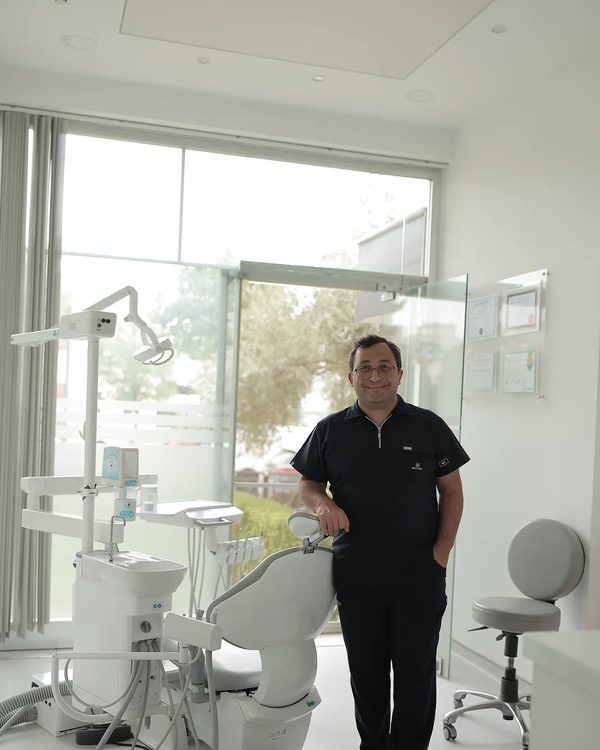
Let’s see together on an X-ray whether your impacted tooth needs to be removed
- Weekdays 10:00–19:00 · Saturday 10:00–18:00
- Şair Ömer Boulevard No:1, Efeler / Aydın
What to watch out for after removal
First 24 hours
- Bite on the gauze for 30 minutes; do not rinse or spit
- Apply cold to the outside of your face at intervals
- Do not smoke or drink alcohol, and avoid hot and hard foods
First week
- Eat lukewarm, soft foods
- Brush your other teeth, taking care around the extraction site
- Take the medicines your dentist prescribes regularly
Check
- Come for your stitch and healing check-up
- Call the clinic if pain increases, you have a fever or bleeding does not stop
In the first days after removal, swelling and some difficulty opening the mouth are expected.
MC Multi Clinic, Efeler

Getting here and facilities
- AddressGirne Mah., Şair Ömer Boulevard No:1, Efeler / Aydın
- Opening hoursWeekdays 10:00–19:00, Saturday 10:00–18:00
- ParkingFree parking
- AccessWheelchair-accessible entrance
- PaymentCredit card and contactless payment
Panoramic X-rays and CT scans (CBCT) are taken at the clinic; you do not need to go to a separate center.
Common questions about impacted teeth
Should every wisdom tooth be removed?
No. Wisdom teeth that have erupted properly, can be cleaned and cause no problems can stay in the mouth. The decision to remove them is based on an examination and X-rays.
Is impacted tooth removal painful?
Because the procedure is done under local anesthesia, you do not feel pain during it. Pain in the following days is controlled with the medication your dentist recommends.
Can the tooth be removed while I am asleep?
For patients with dental anxiety, sedation with an anesthesiologist can be planned. Suitability is assessed at the examination.
When can I go back to work or school after the procedure?
Most people return to their daily routine after resting for 1–2 days. For strenuous exercise, your dentist usually recommends waiting a few days.
How long does swelling last?
Swelling is usually at its worst on day 2–3 and then goes down. Applying cold on the first day reduces swelling.
How can I make an appointment?
To make an appointment you can call +90 256 212 46 46, message our WhatsApp line or fill in the appointment form on the website. The clinic is open weekdays 10:00–19:00 and Saturday 10:00–18:00.
Treating dentistDr. Ömer Kazım ToprakPeriodontist · MC Multi ClinicLast updated: October 2026The information on this page is for general guidance and does not replace an examination.
You may also be interested in


MC Multi Clinic
Ein Team von Zahnärzten verschiedener Fachrichtungen, das in Efeler, Aydın, zusammenarbeitet.
Behandlungen
Unsere Zahnärzte
© 2026 Multi Clinic. Alle Rechte vorbehalten.
Web, SEO und GEO Serkan Yıldız
© Copyright 2026 Multi Clinic. Alle Rechte vorbehalten.
Software, Design und SEO Serkan Yıldız