
Our treatments · Clear aligners
Clear Aligner Treatment in Aydın
Orthodontic treatment without wires or brackets, in which the teeth are aligned step by step with custom-made clear aligners that are changed at set intervals.
- Treatment timeFrom a few months to 2 years, depending on the case
- WearAbout 22 hours a day
- First stepOrthodontic examination and records

- Orthodontiston our team
- X-rays at the clinicpanoramic and cephalometric
- Open on Saturdays10:00–18:00
- Free parkingEfeler, Şair Ömer Boulevard
What’s on this page?
Clear aligners in brief
In clear aligner treatment, a series of thin, transparent aligners is made for your teeth. Each aligner moves the teeth very slightly; by moving on to the next aligner at set intervals, the teeth are brought into the planned position.
The aligners come out when you eat and brush your teeth, and stay in for the rest of the day. Whether the treatment works depends largely on wearing the aligners consistently. Not every case can be treated with aligners; suitability is decided at an orthodontic examination.
When can clear aligners be used?
Suitability depends on the teeth and jaws. Conditions often treated with aligners:
Mild to moderate crowdingOverlapping teeth.
Gaps between teethSpaces between the teeth.
Some bite problemsDeep bite or open bite cases that the orthodontist finds suitable.
RelapsePatients who had braces before but whose teeth have shifted again.
Clear aligners or braces?
Both methods have their place; we decide together at the examination which one suits you.
Clear aligners
- ✓Appearance: Hardly noticeable
- ✓Removable: Taken out for eating and brushing
- !Patient commitment: Must be worn about 22 hours a day
- !Suitable cases: Mild and moderate cases
- •Check-ups: Aligner changes and periodic check-ups
Braces
- !Appearance: Metal or ceramic brackets are visible
- •Removable: Fixed
- ✓Patient commitment: Always in the mouth, so no wearing routine needed
- ✓Suitable cases: Wide use, including complex cases
- •Check-ups: Regular adjustment appointments
In some complex cases, only braces may be suitable, or the two methods may be planned together.
Clear aligner treatment step by step
Examination and recordsDay 1
Treatment planafter the records
Aligners handed overafter the plan is approved
Check-ups and aligner changesthroughout treatment
Retentionat the end of treatment
- Examination and recordsDay 1
An orthodontic examination is done; panoramic and cephalometric X-rays, intraoral and facial photos are taken, and the teeth are recorded with impressions or a digital scan.
- Treatment planafter the records
The movement of the teeth is planned on a computer. The plan, treatment time and number of aligners are reviewed with you.
- Aligners handed overafter the plan is approved
Your first aligners are fitted; if needed, small tooth-coloured attachments are bonded to the teeth. Wear and cleaning are explained.
- Check-ups and aligner changesthroughout treatment
The aligners are changed at set intervals and progress is followed at check-ups.
- Retentionat the end of treatment
A retainer or fixed wire is used to keep the teeth in their new position.
Who is on your treatment team?
Clear aligner treatment is planned and followed up by our orthodontist.
 MC Multi Clinic team · Efeler, Aydın

Orthodontist
Orthodontic examination, treatment planning, aligners and braces.
Inside the clinic


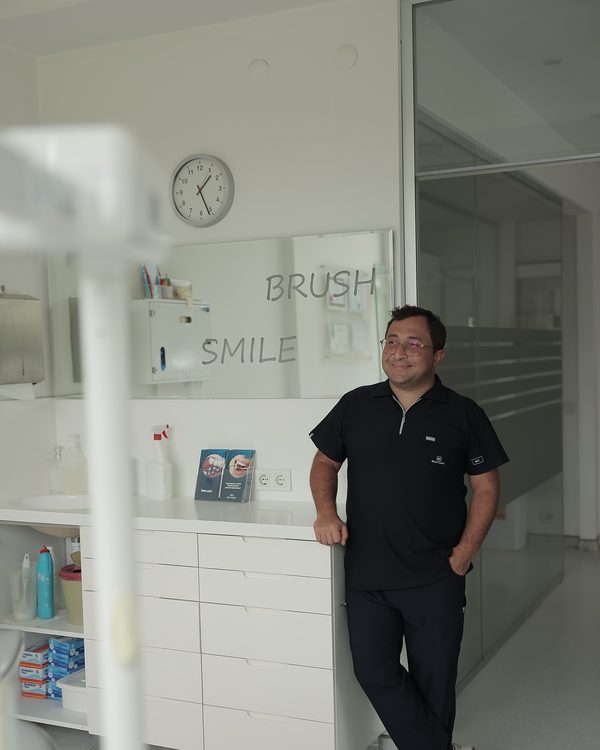
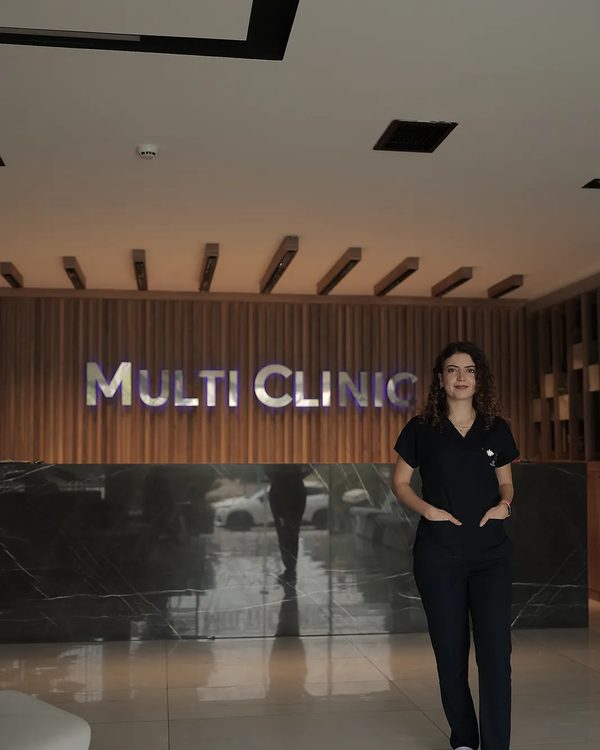
Can your teeth be straightened with aligners? Let us look together at an examination
- Weekdays 10:00–19:00 · Saturday 10:00–18:00
- Şair Ömer Boulevard No:1, Efeler / Aydın
What affects the cost of clear aligners?
It would not be right to give an exact figure before an examination and records. The main factors are:
Complexity of the caseHow severe the crowding and bite problem are
Number of alignersHow many aligners the treatment needs
Treatment timeNumber of check-ups and length of treatment
RetentionRetainer after treatment
What can happen during treatment?
The following are usually temporary and more noticeable in the first few days.
Feeling of pressureFor the first 1–2 days after switching to a new aligner, the teeth may feel pressure.
Change in speechA slight lisp on some sounds may occur in the first few days; you get used to it quickly.
Consistent wearIf the aligners are not worn long enough, treatment takes longer or the plan may change.
Retention is essentialWithout a retainer, the teeth may drift back over time.
What should you pay attention to when wearing clear aligners?
Every day
- Wear the aligners about 22 hours a day
- After eating, brush your teeth and then put the aligners back in
- Clean the aligners with lukewarm water and a soft brush
Things to avoid
- Drink nothing but water while wearing the aligners
- Do not rinse the aligners in hot water
- Do not wrap them in a napkin; keep them in their case
Check
- Don’t miss check-up appointments
- Call the clinic if an aligner breaks or gets lost
- At the end of treatment, wear your retainer as recommended
MC Multi Clinic, Efeler

Getting here and facilities
- AddressGirne Mah., Şair Ömer Boulevard No:1, Efeler / Aydın
- Opening hoursWeekdays 10:00–19:00, Saturday 10:00–18:00
- ParkingFree parking
- AccessWheelchair-accessible entrance
- PaymentCredit card and contactless payment
Clear aligner treatment can be started by adults and, where suitable, by teenagers too.
Common questions about clear aligners
Are clear aligners visible?
Because the aligners are thin and transparent, they are usually not noticed when you talk or smile. The small attachments bonded to the teeth are tooth-coloured, so they are not obvious.
How long does clear aligner treatment take?
It depends on the case; mild cases may take a few months, more complex cases 1–2 years. The length is set in the treatment plan.
Can I eat while wearing aligners?
No. You need to take the aligners out to eat, then brush your teeth and put them back in afterwards.
Can all crowding be corrected with aligners?
No. In some complex cases, braces may be more suitable. Suitability is decided with an orthodontic examination and records.
Do clear aligners hurt?
When you switch to a new aligner, there may be a feeling of pressure for the first day or two. This usually passes quickly.
Will my teeth go back after treatment?
Without a retainer, the teeth may drift over time. That is why a retainer or fixed wire is recommended at the end of treatment.
Can teenagers use clear aligners?
Yes, in suitable cases. Because the aligners need to be worn consistently, commitment from the patient and family is important.
How can I make an appointment?
To make an appointment you can call +90 256 212 46 46, message our WhatsApp line or fill in the appointment form on the website. The clinic is open weekdays 10:00–19:00 and Saturday 10:00–18:00.
Treating dentistDr. Şirin Yaylalı AltuntaşOrthodontist · MC Multi ClinicLast updated: October 2026The information on this page is for general guidance and does not replace an examination.
You may also be interested in


MC Multi Clinic
Ein Team von Zahnärzten verschiedener Fachrichtungen, das in Efeler, Aydın, zusammenarbeitet.
Behandlungen
Unsere Zahnärzte
© 2026 Multi Clinic. Alle Rechte vorbehalten.
Web, SEO und GEO Serkan Yıldız
© Copyright 2026 Multi Clinic. Alle Rechte vorbehalten.
Software, Design und SEO Serkan Yıldız