
Our treatments · Implants
Dental Implants in Aydın
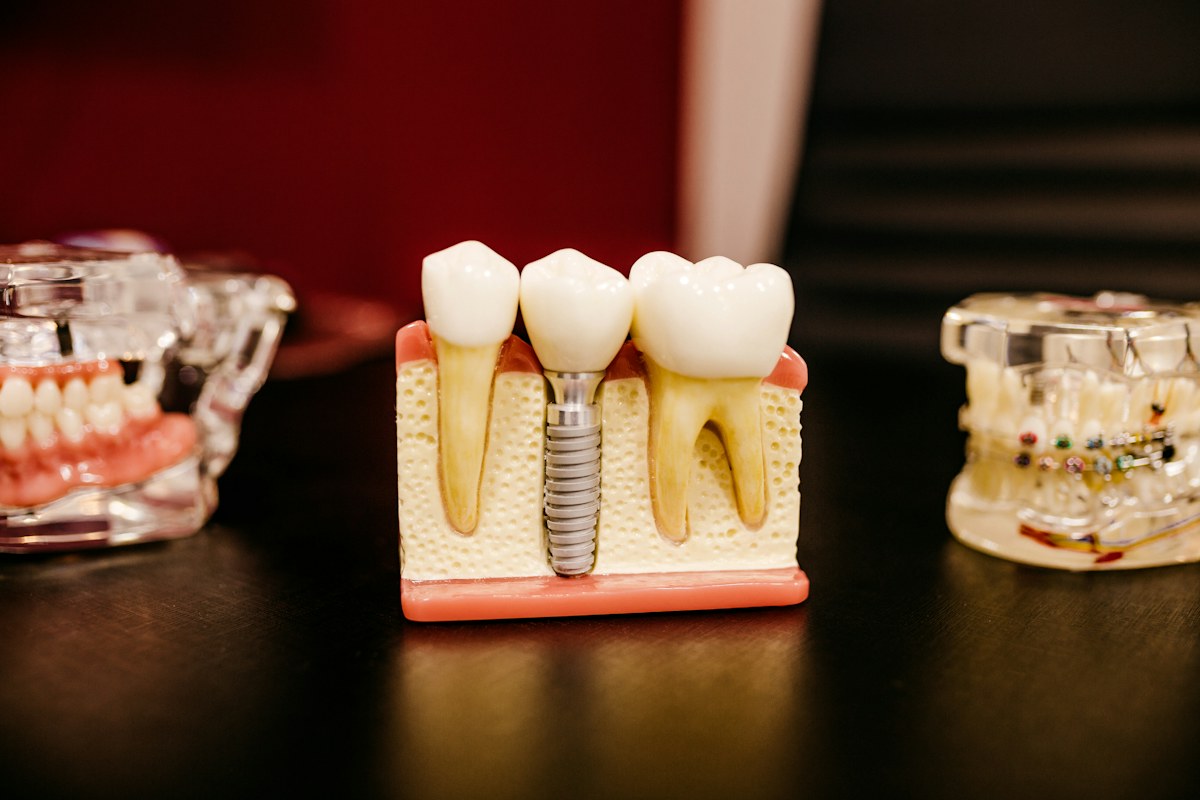
A titanium root placed in the jawbone where a tooth is missing, with a new tooth fitted on top. A treatment that starts with an examination and X-rays, with every step discussed in advance.
- Total timeUsually 3–4 months
- During the procedureLocal anesthesia, sedation if you prefer
- First stepExamination and X-rays

- Periodontistfor implant surgery
- Anesthesiologiston staff, for sedation
- Open on Saturdays10:00–18:00
- Free parkingEfeler, Şair Ömer Boulevard
What’s on this page?
Implants in brief
Implant treatment means placing a titanium root in the jawbone where a tooth is missing and, once the root has fused with the bone, fitting a crown, bridge or denture on top. When there is enough bone, the process usually takes 3–4 months; it may take longer if bone support is needed. The procedure is done under local anesthesia, and sedation can be planned for anxious patients.
At MC Multi Clinic, implant treatment is planned by periodontist Dr. Ömer Kazım Toprak; the tooth on top is prepared by our prosthodontics team, and when needed our staff anesthesiologist provides sedation.
What is an implant and how does it work?
A natural tooth is held in the jawbone by its root. When a tooth is lost, an implant takes the place of that root: the screw-shaped part placed in the bone fuses with the bone over time (a process called osseointegration) and firmly supports the tooth fitted on top. A single tooth can be replaced without touching the neighboring teeth.
1
Implant (root)
A screw-shaped titanium part placed in the bone. It replaces the root of the tooth.
2
Abutment (connector)
The intermediate part fitted on the implant that connects the root and the tooth.
3
Crown (tooth)
The visible part in the mouth. Usually made of zirconia or porcelain to match the color of your other teeth.
Types of implants and when they are used
How many teeth are missing and the condition of the bone determine which solution is suitable. Several of these options are usually discussed together at the examination.
Single-tooth implant
When one tooth is missing, a solution that does not involve cutting down the healthy teeth next to it. One implant and one crown.
Implant-supported bridge
If several teeth in a row are missing, a separate implant may not be needed for each tooth; a fixed bridge is made on two or more implants.
All-on-Four (fixed full arch)
A fixed row of teeth on four implants in a toothless jaw. In suitable cases it can reduce the need for bone grafting.
Details →Implant-supported denture
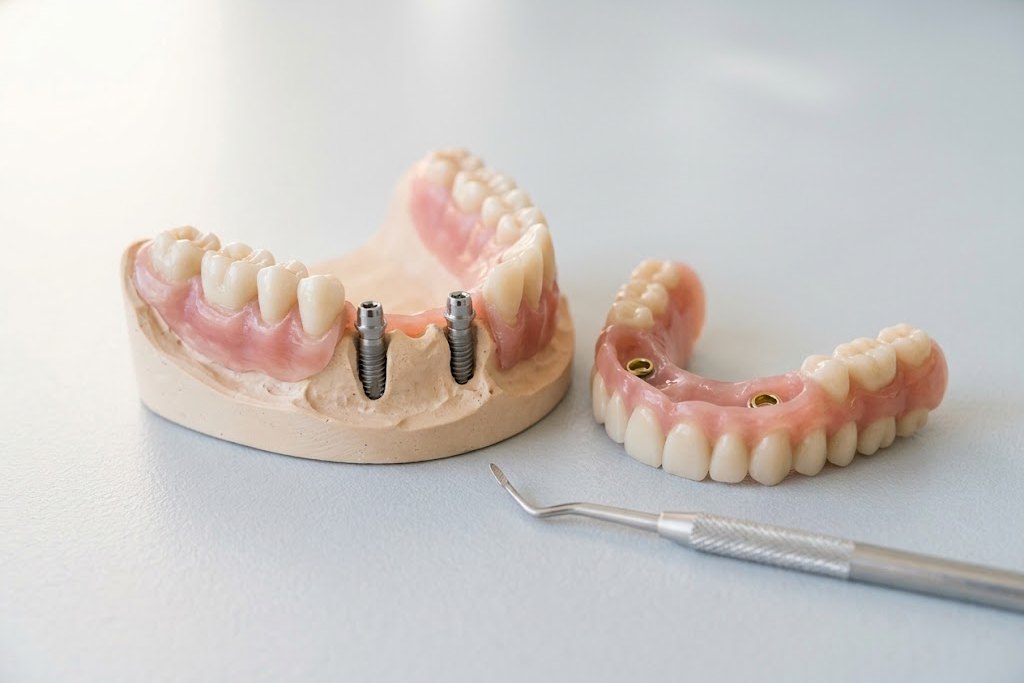
A removable denture attached to two or four implants. The denture is still taken out, but it does not move.
Immediate (same-session) implant
Placing the implant in the same session the tooth is extracted. If the bone and gums are suitable, it shortens treatment time.
Details →Implant with bone grafting
If bone volume is insufficient, a bone graft or sinus lift is done first or at the same time as the implant.
Implant, bridge or removable denture?
An implant is not the only way to replace a missing tooth. The main differences between the three options are below; which one suits you is decided by an examination and X-rays.
Implant
- ✓Neighboring teeth are not touched
- ✓Fixed in place
- ✓Slows down bone loss
- !Requires a surgical procedure
- ✓Brushed like a natural tooth
Treatment timeUsually 3–4 months
Bridge
- !Neighboring teeth are cut down and crowned
- ✓Fixed in place
- ✕The bone in the gap shrinks over time
- ✓No surgery needed
- !Cleaned under the bridge with a special brush
Treatment timeUsually 1–2 weeks
Removable denture
- !Clasp types hold on to the teeth
- ✕Taken out and put back in
- ✕Bone loss continues
- ✓No surgery needed
- !Taken out and cleaned every day
Treatment timeUsually 2–4 weeks
For patients whose general health does not allow surgery or who want a quicker solution, a bridge or denture may be more suitable. We go over the pros and cons of each option with you at the examination.
Implant treatment step by step
ExaminationDay 1
Preparationif needed
Surgery1 session
Healing2–4 months
Tooth fitted2–3 sessions
Check-ups1–2 a year
- Examination and planningDay 1
An oral examination and X-rays assess the height and width of the bone and nearby structures such as nerves and sinuses. If needed, a 3D scan (CBCT) is taken at the clinic. Your general health and the medicines you take are discussed.
- Preparationif needed
Any tooth that needs extracting, decay or gum disease is treated first. If bone is insufficient, a bone graft or sinus lift is planned.
- Placing the implant1 session
Done under local anesthesia; for a single implant the procedure usually takes less than an hour. For anxious patients, sedation with an anesthesiologist can be planned.
- Healing and fusion2–4 months
The implant fuses with the bone. During this time a temporary tooth can be used, especially for front teeth; you carry on with your daily life.
- Fitting the tooth2–3 sessions
An impression is taken; a crown, bridge or denture is prepared and fitted on the implant. Color and bite are checked.
- Check-ups1–2 a year
The implant and the gums around it are followed up with regular check-ups; professional cleaning is done if needed.
Who are implants for, and what if there is not enough bone?
Situations where implants are usually suitable
- A single missing tooth, when you want to replace it without cutting down the healthy teeth next to it
- Several missing teeth, when support is needed for a fixed bridge
- A loose or uncomfortable removable denture
- Jaws with no teeth left
Situations that may need preparation first
- Insufficient jawbone
- Untreated gum disease
- Uncontrolled diabetes, heavy smoking
- Some medicines used for bone loss, or a history of radiotherapy to the head and neck
Bone graftIf the width or height of the bone is insufficient, bone graft material is added to the area. Sometimes this is done in the same session as the implant, sometimes a few months before.
Sinus liftIf the sinus cavity is very close to the bone in the upper back teeth, the sinus floor is gently raised and bone is added underneath, making room for the implant.
Because jaw growth is not complete, implants are usually not placed in children and early adolescents; temporary solutions such as a space maintainer are considered at these ages.
Who is on your treatment team?
An implant is not a one-doctor job: the surgical stage, making the tooth and, if needed, sedation each call for different specialties. Having these specialties in the same clinic means your treatment follows a single plan without referrals elsewhere.
 MC Multi Clinic team · Efeler, Aydın

Periodontist
Planning and placing the implant; preparatory procedures for the gums and bone.

Anesthesiologist
Sedation for patients with dental anxiety or those having several implants.

Dentist
Preparing the crown, bridge and denture fitted on the implant.

Prosthodontics
Crowns, bridges and dentures fitted on implants.
Inside the clinic
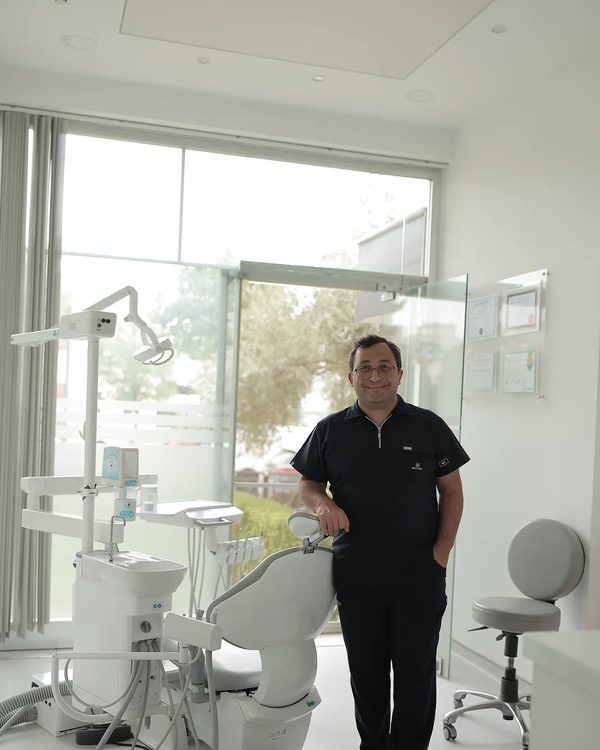

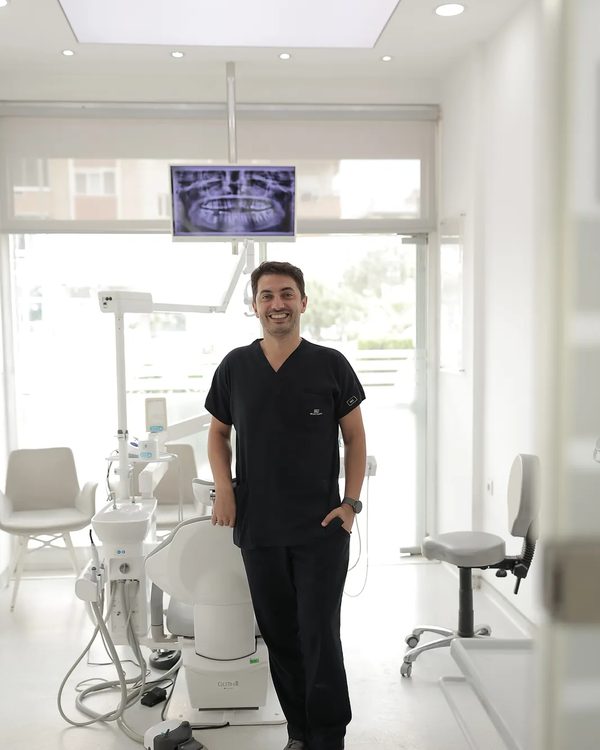
Let’s talk about whether an implant is right for you at the examination
- Weekdays 10:00–19:00 · Saturday 10:00–18:00
- Şair Ömer Boulevard No:1, Efeler / Aydın
What affects the cost of an implant?
The cost varies from person to person; it would not be right to give an exact figure without an examination. After the examination, the steps that apply to you and the scope of the treatment are explained in writing. The main factors are:
Number of implantsOne tooth, several teeth or a full arch?
Implant systemThe brand and type of implant used. The clinic uses Straumann, Neodent, Sweden & Martina, Megagen AnyOne and Nucleoss systems.
RestorationCrown material: zirconia or porcelain fused to metal
Bone supportWhether a bone graft or sinus lift is needed
Preliminary treatmentExtraction, root canal or gum treatment
SedationWhether the procedure is done under sedation
Implant risks and things to watch out for
Implants are a common, well-established treatment, but like any surgical procedure they carry some risks. Knowing them in advance makes it easier both to decide and to look after yourself after treatment.
Failure to integrateIn a small number of cases the implant does not fuse with the bone. The implant is then removed and can be placed again once the area has healed. Smoking increases this risk.
Inflammation around the implantIf oral hygiene slips, inflammation can develop in the gums and bone around the implant (peri-implantitis). It is largely prevented with regular cleaning and check-ups.
Nerve and sinus proximityPlanning matters in areas close to the nerve in the lower jaw or the sinus in the upper jaw. That is why imaging is done before the procedure.
General healthDiabetes, bone medicines and some heart conditions can affect the treatment plan. If needed, an assessment is made together with your doctor.
Coming to your first examination
At the first visit an oral examination and X-rays are done and treatment options are discussed. Bringing the following makes the assessment easier:
- A list of the medicines you take regularly
- Any blood tests from the last 6 months
- Any previous dental X-rays or CT scans you have
- Information about chronic conditions such as diabetes or heart disease
- Your current dentures, if you use them
- Your questions; feel free to write them all down
What to watch out for after an implant
First day
- A cold compress on the outside reduces swelling
- Do not eat until the anesthesia wears off
- Avoid hot, hard and spicy foods
- Take the medicines your dentist prescribes regularly
First week
- Use the recommended mouthwash and clean the area gently
- Not smoking helps the implant fuse with the bone
- Avoid strenuous exercise for a few days
- Do not miss your follow-up appointment
Long term
- Brush the implant tooth twice a day like a natural tooth
- Use interdental brushes or floss
- If you clench your teeth, a night guard can be discussed
- Come for a check-up at least once a year
MC Multi Clinic, Efeler

Getting here and facilities
- AddressGirne Mah., Şair Ömer Boulevard No:1, Efeler / Aydın
- Opening hoursWeekdays 10:00–19:00, Saturday 10:00–18:00
- ParkingFree parking
- AccessWheelchair-accessible entrance
- PaymentCredit card and contactless payment
For patients coming from Nazilli, Söke, Kuşadası, İncirliova, Germencik, Köşk and other towns, sessions can be planned to keep the number of trips down.
Common questions about implants
Is implant treatment painful?
Because the procedure is done under local anesthesia, you do not feel pain during it. There may be mild pain and swelling for a few days afterwards; this is usually controlled with the painkillers your dentist recommends. Sedation can also be planned for patients with dental anxiety.
How long does an implant last?
With regular oral care and check-ups, implants can be used for many years. Gum health, smoking and daily oral hygiene have the biggest effect on their lifespan. The crown on top may wear over time and can be renewed without touching the implant if needed.
How long does implant treatment take in total?
When there is enough bone, it usually takes 3–4 months from placing the implant to fitting the tooth. If a bone graft or sinus lift is needed, this can take longer. In suitable cases the time can be shortened by placing the implant in the same session the tooth is extracted.
Can I have an implant if I do not have enough bone?
In most cases, yes. A bone graft or, in the upper jaw, a sinus lift can provide enough bone volume for an implant. Which procedure is needed is decided by an examination and X-rays.
What can be done if all my teeth are missing?
In jaws with no teeth, a fixed row of teeth can be made on a few implants (such as All-on-Four), or a removable denture can be secured with implants. Which option suits you is discussed at the examination, based on your bone and expectations.
Can a tooth be fitted on the same day as the implant?
In some cases a temporary tooth can be fitted in the same session as the implant. This depends on the strength of the bone and how firmly the implant is held when placed; it is not suitable for every patient.
Which is better, an implant or a bridge?
An implant replaces the missing tooth without touching neighboring teeth and slows bone loss by transferring load to the bone, but it requires surgery and a few months. A bridge is done more quickly but requires cutting down the teeth next to the gap. The choice depends on the neighboring teeth, the bone and your general health.
When can I eat after an implant?
Once the anesthesia wears off you can start with lukewarm, soft foods. In the first days it is best not to chew hard foods on the implant side. Your dentist will tell you at the check-up when you can return to a normal diet.
Can smokers have implants?
Yes, but smoking has a negative effect on how the implant fuses with the bone and on gum health. Stopping or cutting down before the procedure and during healing is recommended.
Can people with diabetes have implants?
Implants can be placed in people with diabetes whose blood sugar is under control. Your recent test results and the medicines you take are reviewed together at the examination.
Is there an age limit for implants?
There is no upper age limit; general health and bone structure are what matter. Because jaw growth is not complete, implants are usually not placed in children and early adolescents.
Can someone with an implant have an MRI?
The titanium used in dental implants is not magnetic; people with implants can usually have an MRI. It is enough to tell the radiology unit that you have an implant before the scan.
What happens at the examination?
An oral examination is done, X-rays assess the bone and surrounding structures, and a CT scan is requested if needed. Your general health is discussed, and the options that suit you, the estimated time and the treatment steps are explained.
How can I make an appointment?
To make an appointment you can call +90 256 212 46 46, message our WhatsApp line or fill in the appointment form on the website. The clinic is open weekdays 10:00–19:00 and Saturday 10:00–18:00.
Medically reviewed byDr. Ömer Kazım ToprakPeriodontist · MC Multi ClinicLast updated: October 2026The information on this page is for general guidance and does not replace an examination.
You may also be interested in


MC Multi Clinic
Ein Team von Zahnärzten verschiedener Fachrichtungen, das in Efeler, Aydın, zusammenarbeitet.
Behandlungen
Unsere Zahnärzte
© 2026 Multi Clinic. Alle Rechte vorbehalten.
Web, SEO und GEO Serkan Yıldız
© Copyright 2026 Multi Clinic. Alle Rechte vorbehalten.
Software, Design und SEO Serkan Yıldız